
Photo Credit: UNSW Sydney
“We can resuscitate her. But first, find these materials and bring them back.”
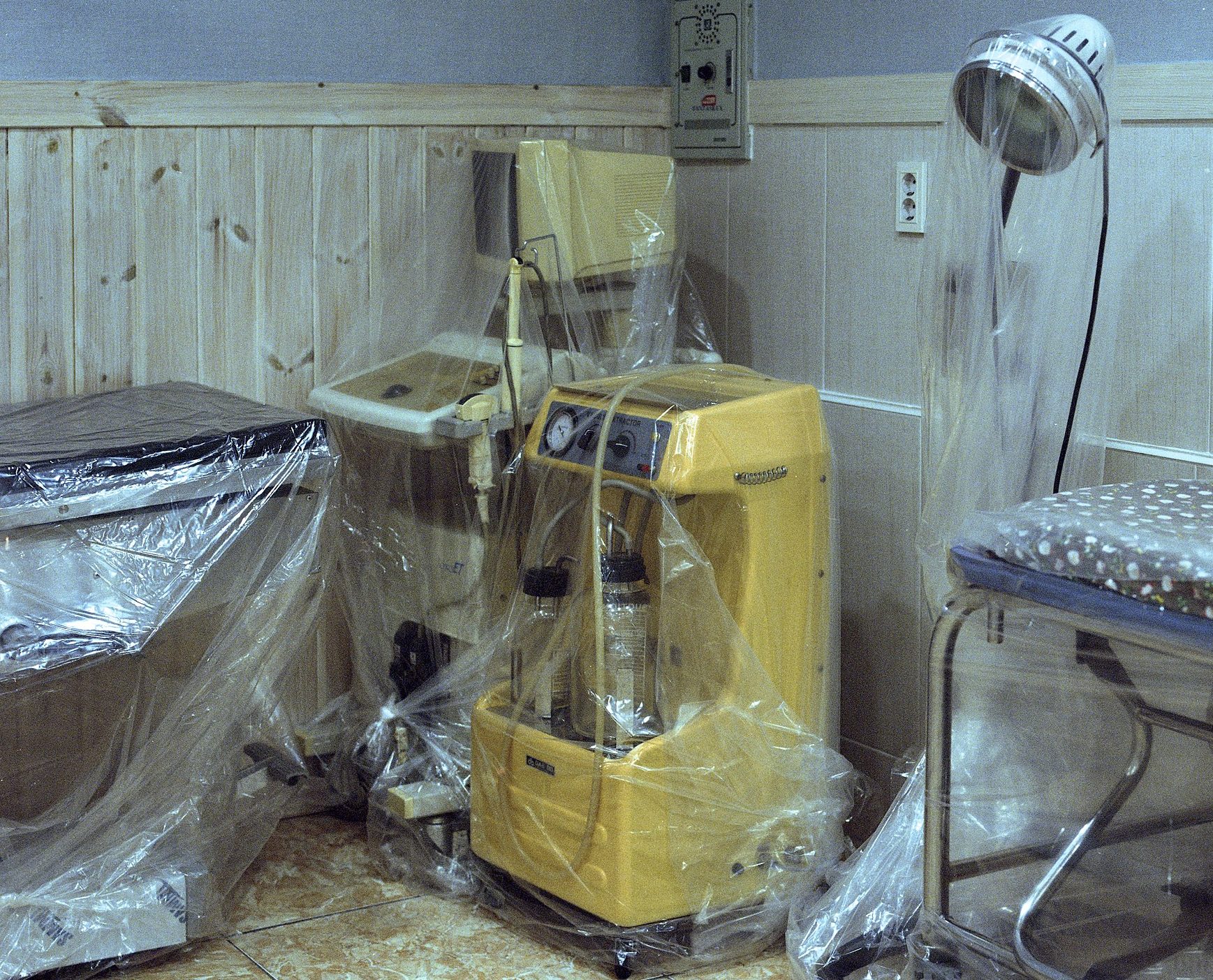
In typical Western hospitals, locating equipment for a surgical operation entails a short walk to the supply closet. In sub-Saharan Africa, however, it is a scavenger hunt—in which surgeries are delayed for hours, days, and even indefinitely.
It was 1:15 p.m. when Professor Sisay Ade, identified by a pseudonym, received a call from Mbale Regional Hospital that his sister, Kofi, also a pseudonym, 58, had gone into cardiac arrest. With a history of end-stage renal failure and diabetes, Kofi had checked into the Msaba Wing that morning to undergo routine dialysis treatment. Thirty minutes later, her heart abruptly ceased to function.
With only one doctor on duty, Ade and his nephew rushed through unpaved terrain—arms filled with borrowed medical supplies—to join the rescue team. Ade’s nephew had been stationed at a surgical camp in Kolony several miles away that had the resources to treat patients. Yet, on the outskirts of Uganda, hospitals were seldom stocked with enough equipment.
During resource shortages, the responsibility falls on family members to scour town markets for life-saving equipment. In critical conditions, where mere seconds could be the difference between life and death, outcomes depend less on a doctor’s performance than on the ability of those around the patient to mobilize resources. Kofi’s cardiac arrest was one such case.
Over the next three hours, the trauma team at Mbale improvised every conceivable solution. An Ambu bag could have delivered automatic ventilation, yet none were stocked. A mask could have delivered assisted breaths, but none were in sight. Suction to clear the airway? A laryngoscope to secure the trachea? Cardioversion to restore a heartbeat? Here, none of it existed.
While Ade squeezed unsterile air from the room into his sister’s lungs, relatives took turns sprinting to nearby pharmacies for drugs and medical centers for supplies. At last, they procured an oxygen cylinder, but with no connector or atropine, the team decided to take her to the high-dependency unit. To their dismay, there were no available beds or alternative units.
Deeming any future attempts medically futile, Ade made the painful decision to pronounce his sister dead. His colleagues, though disappointed, reacted with the quiet resignation of people accustomed to working without the tools they need. For doctors, it was merely another day as “magicians who work without anything to use,” Ade reflected. “Despite the grief I felt at the time, I also felt for the doctor and his team.”
Physicians everywhere are taught to improvise, to make do with the little they often have. But how can the magicians of sub-Saharan Africa improvise without even a wand?
***
Ade’s experience is far from obsolete, yet remains invariably as harrowing. Underdeveloped medical infrastructure has turned trauma care into a desperate search for life-saving equipment across much of sub-Saharan Africa. To illustrate this fragmented procurement process, consider a patient in Mulago, just south of the incident described. After fracturing his femur in a traffic accident, he was admitted to Mulago National Hospital. The standard treatment for this injury is a plaster or fiberglass casting. In this case, where the bone undergoes extreme trauma, treatment is typically coupled with traction and surgical immobilization using orthopedic implants. But, instead of receiving a sterile surgical plate from the hospital, the patient was handed a prescription to purchase it himself.
The patient’s wife had to contact “hawkers,” medical device vendors lingering around the ward. Upon browsing the “hawker’s” catalog of medical devices, she spontaneously conjured up enough funds necessary for the operation, only to realize that the specialized implant they needed was unavailable. She traveled across several villages and procured it from a more developed city.
Seeing families of victims crowd outside pharmacies, timidly clutching prescriptions in their hands, is a heartbreaking sight. “You have to steer your heart away. Against it all, otherwise you’d go mad and rush back to the airport,” noted Professor Richard Lilford, a leading researcher in health economics at the University of Birmingham. Despite returning to these same wards and slums countless times per year, he still feels an irresolvable tug when he sees that a surgical treatment is unavailable despite being widely accessible—almost taken for granted—by those in the UK, his home country.
His work in slums over the past three decades afforded him a degree of emotional fortification, but such strength only went so far. “Some little things I just wasn’t prepared for. And suddenly I did get upset,” Lilford described.
On one trip to Ethiopia, he recalled a boy, around the age of his own son, who experienced restricted shortness of breath and circulation. The boy had developed post-rheumatic mitral stenosis after a strep infection that was left unattended. He was meant to have a routine operation, in which he was “in for a few days and then back out playing soccer a few weeks later.” But, without access to a valve replacement, “this child was just going to die.” “It’s just not the right thing,” said Lilford.
***
The typical implant required for a fracture case costs between $120-$300, depending on the supplier and origin. More advanced implants, such as a mitral valve in the case described above, cost upwards of $3,000. With an average regional GDP per capita of $1,506, these price tags are inhibitively high. After summing up the costs of required materials, patients chip in every favor to pool whatever money is available. Still, with 47% of patients facing impoverishing health expenditures (defined as a cost pushing a patient below the World Bank’s extreme poverty line) and about 80% vulnerable to such ruin, it is often insufficient.
“In a country with no insurance model, catastrophic spending is what has to happen,” said Lilford, whose current project with the Gates Foundation involves collaborating with African governments attempting to implement more inclusive insurance policies.
While current plans do provide some coverage for surgeries, insurance has not historically covered the total cost of materials like implants, resulting in hefty copayments that only a wealthy minority can afford. “What we’re [now] worrying about is that these insurance systems will produce perverse effects, sometimes vitiating the very problems that they were designed to solve,” he explained.
Those effects are already visible. In regions with limited government regulation, clinics have strategically maximized revenue by prioritizing billable procedures over proper diagnostic care. “She doesn’t need an injection. She needs to go have a scan of the uterus and someone to look at her cervix,” Lilford said, recalling a patient with post-menopausal bleeding. “It’s hard to imagine that this is necessary because they put a charge in for those services.”
In unpublished findings, he found that over 40% of patients presenting with cancer and rectal bleeding were prescribed nothing more than antibiotics. “Do the doctors know that this [bleeding] is not a sign of infection?” he asked. Presumably, many do.
According to Stella Itingu, an executive officer at The College of East, Central, and Southern Africa (COSECSA)—this grim reality is why examiners from Western countries are often brought in to reaffirm quality standards of care are upheld. And, yet, many examiners have found that doctors’ training is not the issue. Doctor Sarah Khormaee, a former orthopedic surgeon at the Hospital for Special Surgery (ranked first in the world for specialized care) corroborates. She said she was struck by the ingenuity of surgeons in the region, who achieved strong results with a fraction of the resources.
They understand that procedures are not clinically necessary, but the poorly-regulated insurance landscapes enable and even nurture unethical doctoral practices—where doctors maximize billing profits at the expense of patients. “That’s the business model,” Lilford explained. Additionally, some clinics that accept insurance charge patients twice––once upfront and second by billing the insurer––effectively doubling their revenue. As a result, insured patients who cannot pay upfront fees are turned away. As such, a system meant to provide reassurance and expand access has the opposite effect: insured patients end up excluded from care or are left paying even more than the uninsured.
The economic burden is only exacerbated by what Khoramaee calls a “double cost;” weak labor protections and a lack of traffic regulations leave workers disproportionately vulnerable to injury. Construction laborers work without harnesses, and motorcycle taxi drivers navigate unpaved roads without helmets. Many injured patients are their families’ primary earners. With employers rarely providing compensation or medical leave, treatment brings not only high medical bills but also lost income. Patients face a stark choice: incur years of debt for care, or forgo treatment, risk permanent disability, and endanger their family livelihood.
***
The burden is not merely financial but one of extreme psychological distress. An injury that could be fixed within hours may be postponed for weeks or longer. During that window, patients confront the added guilt of troubling their loved ones to fund their operating costs.
Medically, delays in treatment quickly lead to complications. In fracture cases, bones begin to heal incorrectly. “Surrounding muscles may contract and pull the bone fragments past each other,” which encourages infections and makes surgery more difficult, explained Khormaee. When extreme bone malunion has occurred, treatment may no longer become plausible altogether.
This danger is most prominent in regions lacking efficient transportation. Doctor Tim Pohlemann, a trauma surgeon and the former president of AO Alliance, remembers rural patients traveling “three, four, sometimes five days just to reach a basic hospital.” This is largely because only 43% of roads across Africa are paved, a large share of those—approximately 30%— lying in South Africa. For the vast majority of patients who already face delays due to country-wide equipment stock-outs, these added travel delays mark the end of the road. Even “the best surgeons can’t do much if the patients come too late,” Pohlemann expressed.
***
Of the few patients who reach hospitals in time, a number are fortunate to receive pro-bono equipment from visiting surgical missions or charitable nonprofit organizations, such as SIGN Fracture Care. Khoramee, the CEO, explained that SIGN manufactures an FDA-approved intramedullary nail designed for low-resource settings. It requires no electricity for implantation and fits a wide range of sizes. Still, such donations only fill short-term gaps. Supplies are limited and distributed on a first-come, first-served basis—and once they run out, patients must return to buying from “hawkers.”
Families who struggle to afford medicine and are not recipients of pro-bono resources often turn to black-market pharmacies for substandard implants. The higher complication rate of operations involving such equipment potentiates the need for future corrective surgeries that families will certainly be unable to afford.
When asked about his conflicting ethical obligations to treat and simultaneously to do no harm, Pohlemann, who has witnessed this situation first-hand, said “The medical intuition is, of course, to act.” It is “difficult to get the best results, but you will avoid the worst.”
Pohlemann added that, “the danger won’t so much be with the operation itself” but the post-operative complications a patient might face when receiving a substandard implant. Albeit flawed, there are improvised methods for molding an implant into position. During many visits, Pohlemann witnessed physicians malleate surgical plates, modifying their shape by brute force to tailor them to human anatomy. “They are just metals with holes,” he explained. “Many local manufacturers are already able to copy the part and sell products for a fraction of the name-brand.”
But surgical risk does not stop when patients receive the implants. The fit of an implant means little if the material harbors contaminants. Black-market implants are rarely manufactured in sterile conditions. This counterfeiting exposes patients to high rates of surgical site infections, up to 41.9% in Tanzania, compared with 1.2% in the United States.
Additionally, a piece of equipment passes through many intermediaries—from manufacturers to transporters to “hawkers”—who are often unequipped to handle fragmented procurement conditions, such as dust levels and temperature. A set of screws and plates might fit the bone perfectly, but whether it was manufactured and transported in a controlled manner can mean the difference between recovery and life-threatening sepsis.
***
Pohlemann noted that low- and middle-income countries in Africa are at a stage similar to where Europe was 40 years ago. Growing up in Germany, he witnessed how, even without major surgical breakthroughs, progress could be made in the prognosis of trauma patients through policy. He is adamant that the next generation of trauma care will improve not “through technologies so novel that nobody has been able to replicate it today,” but through systemic policy reforms in education, infrastructure, and basic standards like sterility.
Lilford echoed the need for infrastructural development, arguing that the automotive, mechanical focus of current nonprofits is one that sub-Saharan Africa cannot maintain—it must be replaced with more organic efforts. “A device’s utility cannot be easily separated from the socioeconomic conditions under which it was defined,” he warned.
Touring a cancer clinic in Africa, he once found “some bloody great linear accelerator…too heavy to carry, sitting in the basement,” and contaminated with dust. “It was donated,” but they did not have the patient population to afford such high-tech care. For Lilford, progress does not hinge on exorbitant equipment but on the surgical training of primary healthcare workers, technicians, and administrators. “Education trumps implants,” he said. The principle is captured in the old cliché: “Teach a person to fish rather than giving them the fish.” The more organic the change, the more sustainable the outcome.
This philosophy also resonates with Itungu, who directs operations at The College of East, Central, and Southern Africa (COSECSA), the region’s leading surgical training institution. To her, the continent’s greatest need is investment in human, not mechanical, capital. Separately, Itungu underscored one of the continent’s most pertinent obstacles, the practice of skilled graduates following the “brain drain.” Regions that are the most medically dire are often the most politically unstable and dangerous. Khormaee, who has overseen SIGN Fracture’s surgical training in some of Africa’s most volatile settings, recalled that kidnapping and armed conflict often forced her teams to conceal their names or locations for safety. Many of the best clinicians left for safer, better-resourced countries, perpetuating a cycle of medical inequity.
To begin addressing sub-Saharan Africa’s medical infrastructure, experts like Itungu agree that the region’s internal priorities must evolve. Before she transitioned to medicine, Itungu worked at the World Bank under the East Africa Community for a decade, witnessing the continent’s humanitarian leaders direct nations’ focus towards negotiations with international financial institutions in an effort to further assert Africa into the global market. These engagements seek debt relief, currency stabalization, and foreign investment, all legitimate goals. But, recognizing the limited administrative capacity of sub-Saharan nations, they also inadvertently divert attention and resources from the development of distressed local systems, systems that have a tangible daily impact on their citizens. “Stocks should not be the priority; we have to look at the health of our people,” Itungu asserted.
She adds that “of 650 applicants to COSECSA medical school each year, over half of the candidates cannot afford it.” To bridge this financial gap and allow more applicants to receive an internationally standardized medical education, COSECSA has reduced the cost of tuition by hiring trainers on a pro-bono basis and funding more than 125 scholarships per year.
***
There are still many reasons to be optimistic about the future of sub-Saharan African healthcare. Economically, strides have been taken to widen the country’s tax base–promoting public welfare spending. Estimates from the UN Trade and Economic Development (UNCTAD) Africa Report suggest that illicit financial outflows like tax evasion are at nearly $89 billion per year—a sum that far exceeds the $60 billion Africa receives in foreign aid yearly and one that could drastically transform healthcare infrastructure. While this shadow economy has remained persistent in the last decade, Lilford is hopeful that the continent’s recent push for digital economies will shrink it. He believes that their ability to scrutinize bank accounts, however small, will finally make auditing and prosecuting financial crimes commonplace.
Professor Lilford also cites the formalization of informal actors in the economy as a crucial way to expand the tax base. Over 90% of sub-Saharan Africa’s labor force––which accounts for 62% of the region’s GDP––is employed informally. However, 40 countries have begun to chip away at this, reducing the informal sector by an average of 9% through digitized tax systems. In one estimate, the formalization of enterprises in Africa could generate additional revenue of $125.3 billion annually for public expenditure. If such fiscal reforms continue, sub-Saharan Africa may proceed towards a future of self-sufficently funding its healthcare.
***
Ade’s failed yet formidable mission to resuscitate his sister is an age-old narrative. And Liliford observed a similar case soon after. A man in his mid-20s received dialysis for chronic kidney disease. He had received a kidney transplant earlier in his life, but his kidneys were failing again because post-operative care was inaccessible. He needed dialysis to live and had always relied on his uncle to find the equipment for his treatment, yet his uncle had “his own children, too,” Lilford explained. After due time, the uncle was no longer willing to continue the search.
“This would be the boy’s last session before he was sent home to die. He knew exactly what the situation was, and he looked absolutely terrified.”
Standing beside their respective patients, Lilford and Ade both understood that they were not dying of merely kidney failure or cardiac arrest; they were dying because of a system that cannot deliver modern medicine nor the tools to apply it.
Despite the commendable efforts of international organizations to fill short-term gaps in hospital stock-outs, much progress still needs to be made in solving sub-Saharan Africa’s equipment infrastructure. “You might put in more oil, more petrol, but that machine won’t put out anything,” in the long run, insisted Lilford.
Without investment in the foundations of a functional society, every donated device, every trained surgeon, and every act of dire improvisation to meet the unfulfilled needs of a patient will remain a temporary fix to a permanent problem.