
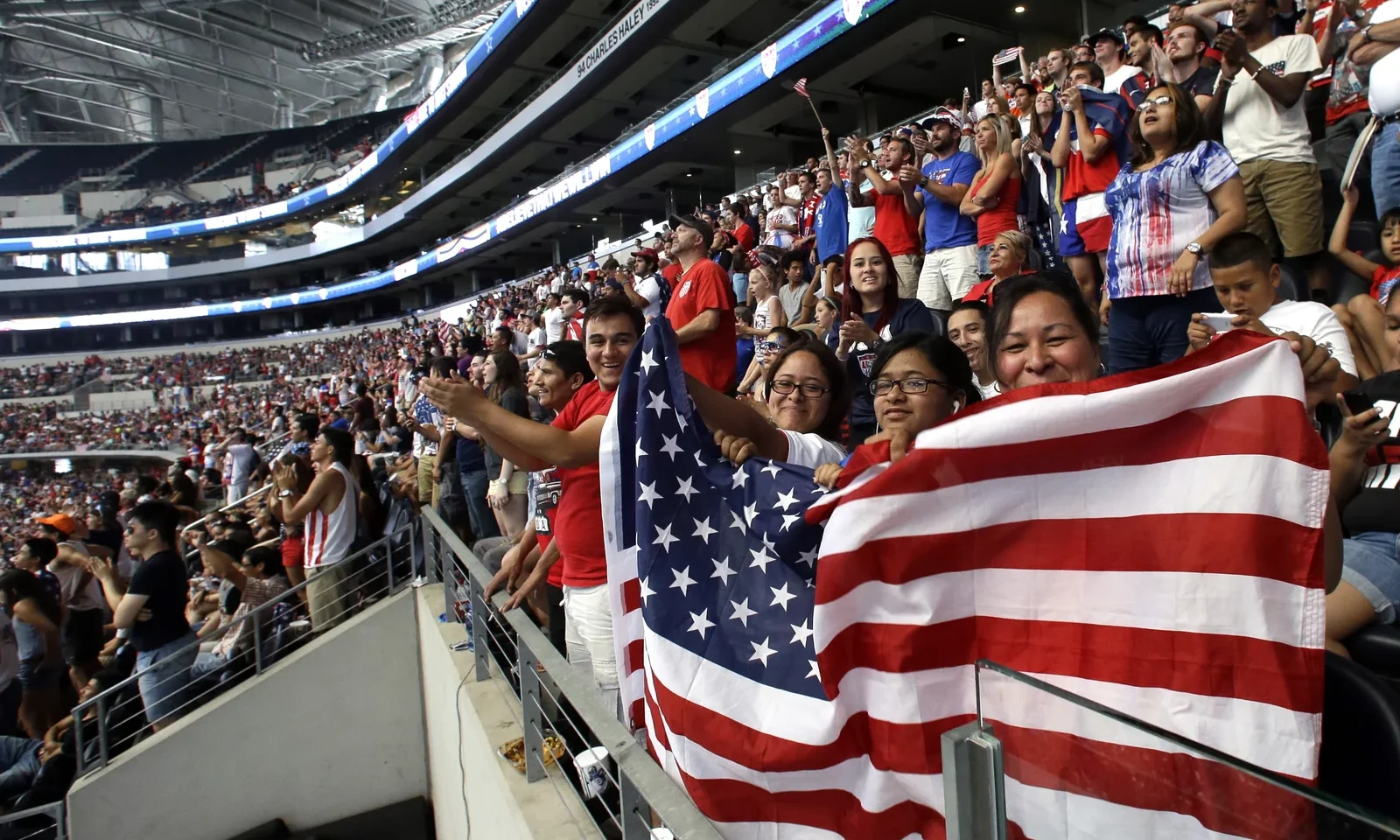
Melissa Fernando began watching soccer in 2006 when her home country, Australia, qualified for the World Cup for the first time since 1974. More recently, she planned to fly to the United States (U.S.) to watch them compete in 2026. Faced with growing concerns about immigration enforcement and personal safety, Fernando, however, has decided that she will not attend the U.S. legs of the World Cup. In her own words, “what sealed the deal for us were all of the ICE incidents, and the killing of that lady, Renée Good.”
On January 7, 2026, Immigration and Customs Enforcement (ICE) tragically and fatally shot Renée Good in Minneapolis. Good, a 37-year-old unarmed U.S. citizen who was a legal observer of ICE activity in Minneapolis, was shot three times by ICE agent Johnathan Ross through her car window as she drove away. The Trump administration dismissed her death by calling Good a “left-wing agitator.” The image of masked, armed federal agents killing a civilian spread around the world, becoming a symbol for a new age of American state violence. For fans like Fernando, that translated into concerns about what it means for international visitors to be welcomed—or policed—in a new U.S.
The rapid expansion of ICE’s presence and the apparent overreach of its function are not simply American questions; they are becoming international issues—the Trump administration has ensured that. News that ICE would be present at the 2026 Winter Olympics in Milan sparked international outrage. Milan’s mayor, Giuseppe Sala, referred to ICE as, “A militia that kills.” He continued, “They are not welcome in Milan, without a doubt.” It raises the question of what the limits of ICE’s functions are under the Trump administration. If ICE can find its way to the Olympics in Milan, what would it look like to host a World Cup in America?
“We were always apprehensive about the U.S.,” said Fernando. “What if they deny our entry and then we’ve wasted all this money?” Her fear extended beyond entry into the U.S. “The Renée Good incident and the administration’s response to it made us think that this was not going to be safe. Half of the group that was going, including my brother and me, are Brown. We were pretty scared of all this stuff that’s happening with ICE.”
Those fears are now being echoed by larger organizations preparing for the World Cup, like the American Federation of Labor and Congress of Industrial Organization (AFL-CIO). The director of their international department, Cathy Feingold, said, “For spectators to come to our country, they need to know that there will be no ICE, and no unnecessary militarization of the games.”
The international anxiety has only grown as U.S. immigration policy has hardened. On January 14, 2026, the White House announced that it would indefinitely freeze immigrant visa processing for individuals from 75 countries. Nations playing in the World Cup include Brazil, Colombia, Egypt, Ghana, Haiti, Iran, Jordan, Morocco, Senegal, Tunisia, and Uruguay. While the restrictions do not apply to tourist visas, the message of ostracization is unmistakable. “It’s confusing that they’ve agreed to host a World Cup and then banned a lot of countries where football is really integral,” said Fernando.
That climate of exclusion is especially jarring in the world of soccer, a sport with a large immigrant and non-white constituency. Latinos made up 33.4% of Major League Soccer (MLS) players and 25% of MLS head coaches in 2019—more than any other Major League sport in the U.S..
“I’m old enough to remember when MLS first started in this country. As a son of immigrant parents, I remember hearing grown-ups talk about how they would get harassed at the park for playing soccer. Soccer in this country was always, until recently, an immigrant sport,” said Rudy Crown, a Miami-based creative and Director of Content and Strategy for soccer podcast Hermanos F.C.
Felipe Cardenas, a senior writer for The Athletic, remembers a similar divide. “I grew up playing soccer in the 90s, which in America was very much a fringe sport. But when I went to Colombia, it was the biggest sport in the country. It was the biggest sport on the continent. The passion around it was just incredible.”
But, now, those same communities are being targeted by the policies of an administration positioning itself at the front of these games. “Trump wants to be the face of the tournament,” said Cardenas. “I think he views it as an opportunity to shine light on himself and the United States. But… anytime he has been alongside Gianni Infantino, he tends to say things that overshadow the tournament.”
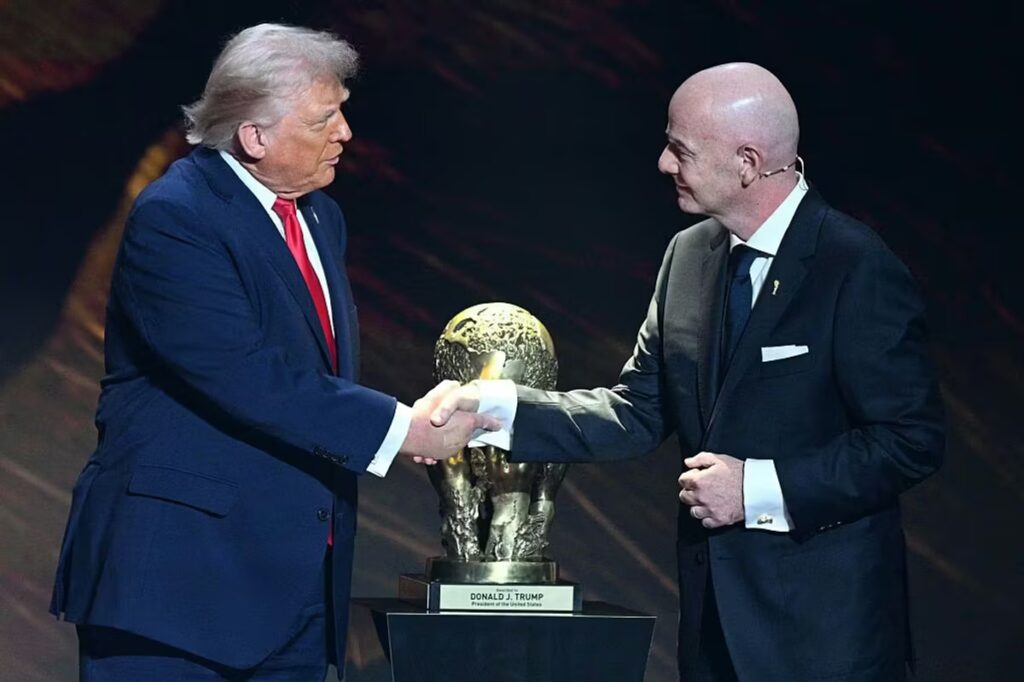
This is the central contradiction. There is Trump—famous for his anti-immigrant and discriminatory rhetoric and policies—trying to use the World Cup as a form of self-promotion. Then, there is the reality of soccer as an international sport, with prominent players from the very same countries that Trump is barring from entry, such as Brazil and Colombia.
“The sport itself is so global,” said Crown. “But that universality sits uneasily beside policies that critics say are targeting Brown and Black communities.”
FIFA’s moral ambivalence sustains the contradiction: despite pressure from the AFL-CIO and a broader coalition, the organization has offered no guarantees. Given FIFA president Gianni Infantino’s well-documented relationship with Trump, the organization had a clear avenue to coordinate with the White House on this issue. Instead, FIFA declined to do so in favor of pursuing the tournament’s financial and commercial benefits.
Cardenas attended a Miami event featuring Lionel Messi, Gianni Infantino, and Donald Trump. “I was honestly shocked by Infantino’s casual way of discussing the Trump administration,” said Cardenas. “Perhaps he got too comfortable in a setting of very pro-Trump politics. I’m paraphrasing, but he basically said that he didn’t understand why there was so much pushback against Trump’s policies, because they were working.”
That proximity only further reinforces doubt about FIFA’s priorities heading into this World Cup. “FIFA’s priorities are making as much money as possible and not really having any kind of moral compunction about the people they’re working with,” said Andrew Helms, a sports journalist and documentary filmmaker. Crown puts it more bluntly: “It’s the almighty dollar. FIFA has been notoriously corrupt, and they don’t hide it. FIFA just doesn’t care. It’s all about the dollar.” While FIFA could theoretically take a stand, realistically it could never do so without jeopardizing years of planning, sponsorships, and logistical commitments.
FIFA’s refusal to draw a line—even around the presence of ICE at its own matches—emphasizes how they are willing to accept almost any political reality as long as the tournament continues and revenue comes in. But this moral indifference is not an aberration in global sports. It is part of a much longer history of governments using major sporting events as political theaters.
The idea that sports should remain apolitical remains popular among administrators and fans alike, but history says the opposite. “People don’t understand how deeply entrenched politics are in the way this world works…and sport is no different,” said Crown.
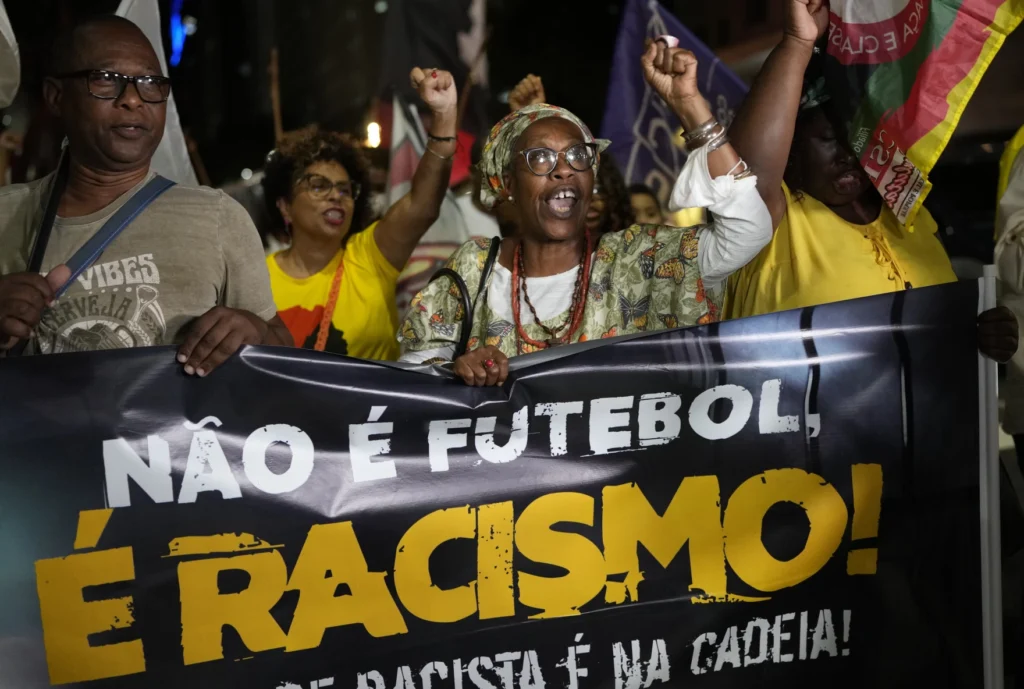
Internationally, Brazilian soccer forward Vinicius Junior faced racist abuse from fans in Spain, prompting FIFA to create an anti-racism committee in 2023 and Rio De Janeiro to pass new laws requiring games to be suspended in case of racist conduct. Whether in America or abroad, sports do not escape politics. This pattern has played out repeatedly on FIFA’s largest stages. The past two men’s World Cups—Russia in 2018 and Qatar in 2022—and now the tri-lateral games in 2026 have all faced intense scrutiny. Russia for an oppressive regime and the illegal 2014 annexation of Crimea, Qatar for workers’ and human rights violations, and the U.S. for the Trump administration.
The U.S. World Cup bid predates the current political climate. The joint proposal with Canada and Mexico was unveiled in April 2017 and accepted in 2018, before the second Trump administration’s immigration and human rights agenda took shape. “It’s important not to lose sight of the fact that the people trying to grow soccer in America have existed and have been trying long before Donald Trump was ever involved,” said Helms.
He contrasts the trilateral bid with Russia’s. “When Russia sought the Sochi Olympics and the World Cup, that was driven from a perspective of sportswashing.” Sportswashing refers to the use of major sporting events to cleanse a government’s reputation. When Russia hosted the Sochi Olympics in 2014 and the World Cup in 2018, it was illegally annexing the Crimean Peninsula and facing international condemnation—yet projecting an image of normalcy through the sport.
While Russian forces occupied Crimea and faced sanctions and international criticism, the government invested billions in the Olympics to portray Russia as stable and welcoming. The contrast between Russia’s political reality and the image they wished to present to the world was stark, demonstrating how events like the Olympics or the World Cup can distract from human rights violations and reshape international perception without addressing underlying issues.
Global tournaments, then, do not exist in isolation from politics. The spotlight these tournaments put on a country enables administrations to capitalize off the immense viewership, and turn them into political tools.
In that context, the Trump administration’s increasingly aggressive and discriminatory immigration policies take on an unsettling cast. “The U.S. World Cup before Trump felt a little more soft-powery,” said Helms. “But now, with the immigration crackdowns, it all feels a little different.” When ICE uses violent force in American cities, tears families apart outside of schools, and racially profiles Americans, it makes state force visible, routine, and woven into the fabric of everyday life in a new America. This is not a mere administrative or legal decision; it is a performance of power. The question now is not whether the games will happen, but rather what they will come to represent.
For international fans like Fernando, that meaning has already shifted. “Growing up, we had a more positive image of the U.S.—as a melting pot of different cultures and different people,” said Fernando, “but that perception’s just completely shifted and gone the other way.” It is understandable that FIFA is too committed to back out now, but the tension between a tournament built on global openness and a country enforcing increasingly restrictive immigration policies is unresolved. “It’s confusing why FIFA would choose the U.S.,” said Fernando.
The Trump administration clearly sees the World Cup as an opportunity to put a glossy image of America on display. However, global events are risky marketing tools. The U.S. will have to reckon with its international image if it wants this World Cup to be successful. “There’s an incongruity of trying to host an event that is supposed to bring the world together under an America-first policy agenda,” said Helms. When the spotlight turns to America, it will not just capture goals and celebrations—it will capture detentions, arrests, and protests.
That global scrutiny will intensify as the tournament draws closer. As Crown put it, “the whole world is watching, but the world doesn’t love America.” The World Cup will bring the world’s eyes to America and the White House exactly as Trump wants. The question is what will happen once those eyes are here. Will they only see the spectacle, or will they see Trump’s agenda behind it?