
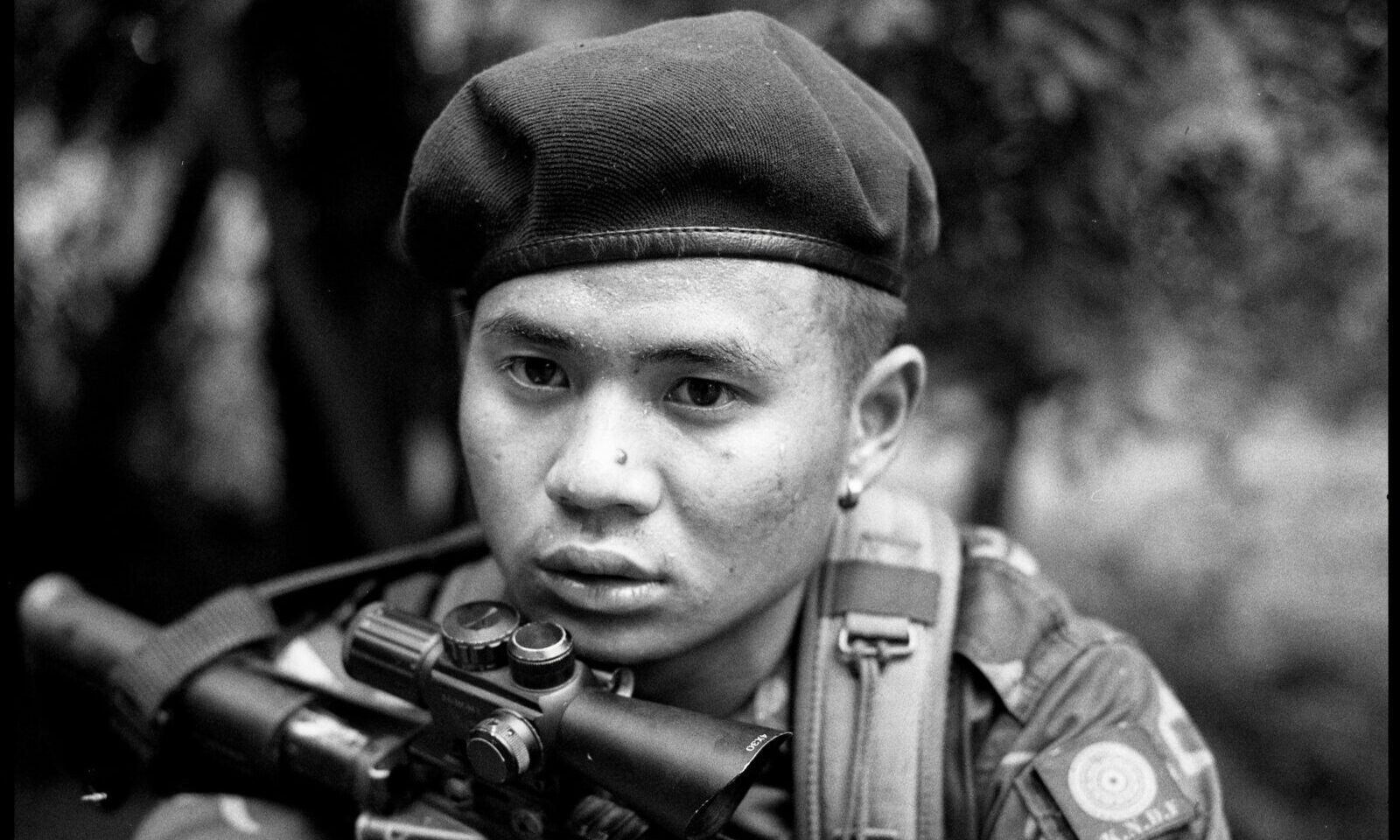
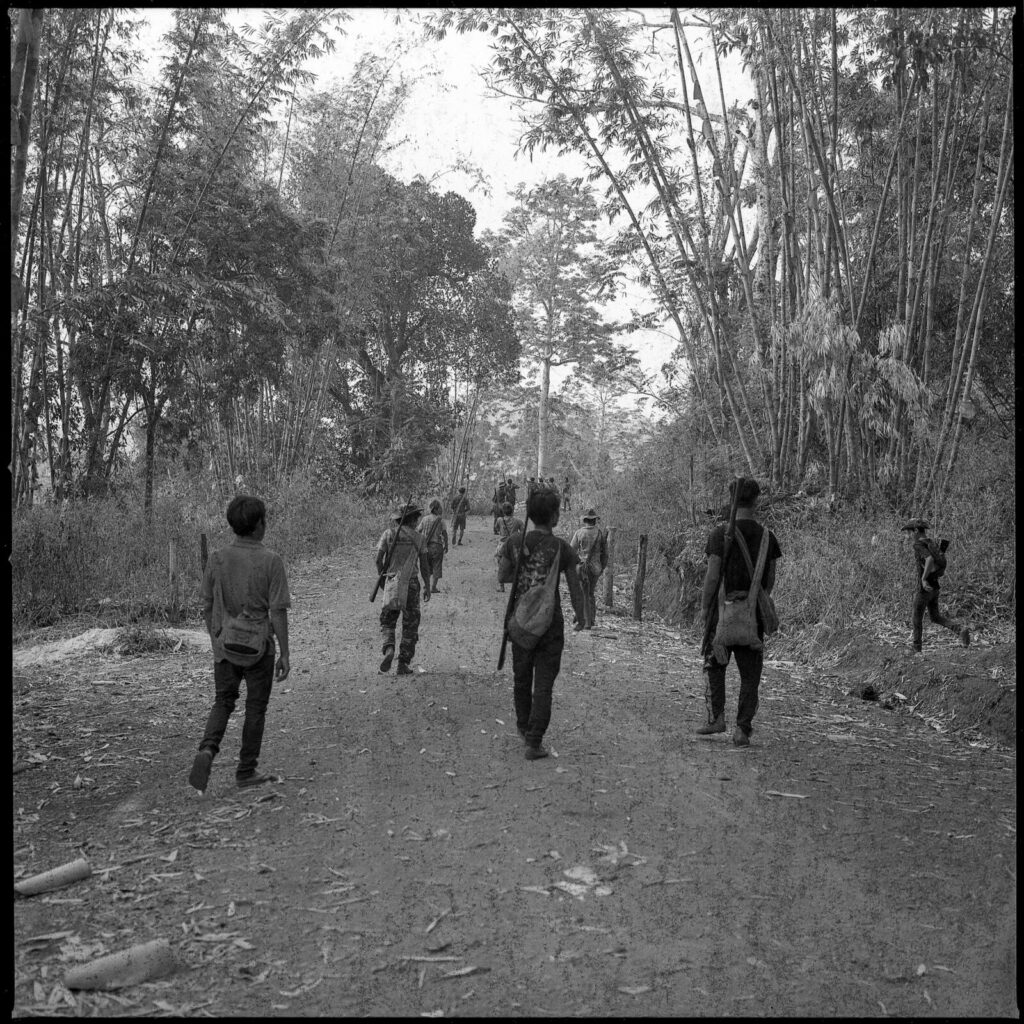
Photo credit to independent photojournalist, Ta Mwe.
Stirrings begin before dawn. Rice is eaten by the fire while it is still dark. People move quietly, carrying only what they can, riding on horseback or on four-wheel drive trucks when danger requires it. There is a short pause around midday for some packed rice by a stream, then they continue on. Camps are temporary, fires a luxury for when the Burma Army is far enough away. No one stays anywhere long enough to feel secure.
Days like this repeat themselves. Sometimes without incident, sometimes not.
“I knew the war was going to be long,” said David Eubank, a former U.S. Army Special Forces Officer and founder of Free Burma Rangers, a humanitarian aid organization that works in conflict zones in Burma. “I did not expect anything to be short. This is the longest running war in the world from 1949 to now—fighting all over Burma.”
Conflict has shaped daily life across generations, not through decisive battles but through routines of avoidance and learned abnormality. Since the 2021 coup and the military junta’s takeover, everyday life has deteriorated. “They’re advancing, they’re shooting and shelling and doing air strikes and dropping drone bombs and people are being wounded,” added Eubank. “It’s all gotten worse.”
Eubank spends most of his days moving around the country, trying to help as many people as he can while hiding from the Burmese Army. “If you’re anywhere near a road they can find you,” he said. Some days are spent meeting displaced families at radio-designated clearings in the jungle to provide humanitarian assistance, ranging from food and clothing to setting up a makeshift dental clinic. “You really have fun together and all your fears and worries go away for at least a day,” he added.
Other days are spent in combat.
Eubank and his team accompany resistance groups to the front line, deploying rescue parties and manning casualty-collection points to treat the wounded. He recounted one incident, where his team evacuated a resistance fighter who had been shot in the back and was bleeding out through his chest.
“We carried him back on a hammock strung on a bamboo pole, then put him on a truck and drove him to a little hideout in the jungle,” he said. The operation took place under a tarp in the jungle. The man survived.
“Over half of Burma is controlled by different resistance groups,” Eubank said. “But every major city is still controlled by Burma Army…and they control the sky so any time you can be bombed from the air.” The country remains in a constant state of conflict and disquiet, with territory changing hands and millions of people being displaced along the destructive path of the Burmese Army. “In one village they went through, they looted most of the houses and placed over 100 landmines in that small village,” he added.
Five years after the coup, the war has neither abated nor burned out. “What scares people? Everything,” Eubank said. “If the Burma army is close—there’s shooting, getting captured, being tortured to death. If they’re further away—heavy mortars and artillery. And all the time, drones and jets.”
The war has embedded itself into the very fabric of daily life. People are hopeful, yet tired, having lost friends, families, and loved ones to the violence. More than anything, “they feel more forgotten,” he said. “The world hasn’t stepped in.”
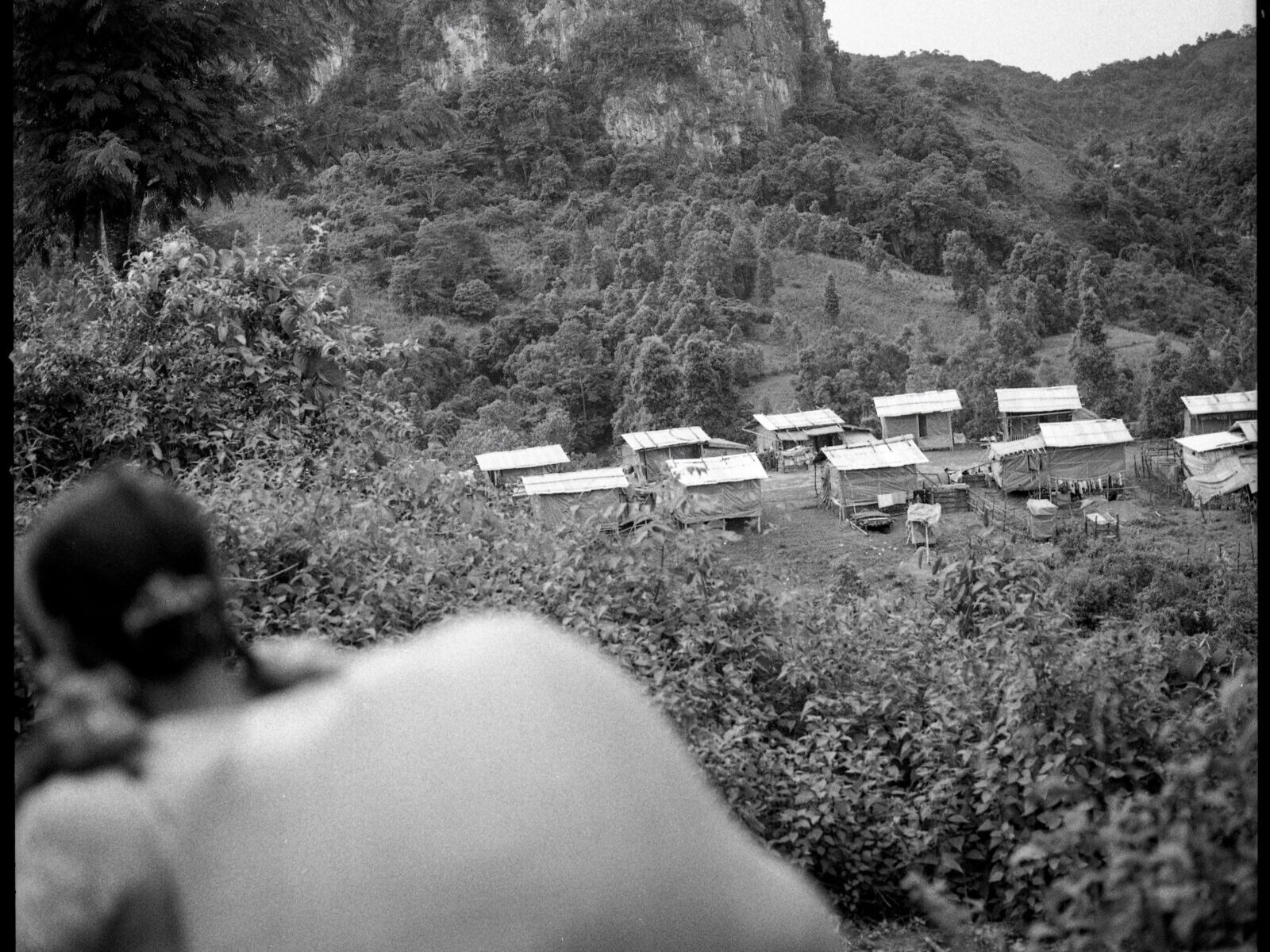
Tracing the Coup
Myanmar, often referred to by its former name Burma, has been shaped through a prolonged and intimate relationship with military rule. In 1962, the Tatmadaw seized power through a coup, with Myanmar entering decades of authoritarian governance and economic isolation. Mass protests in 1988 shook the nation, briefly destabilizing the regime, and opened the door to limited political reform. Two years later, Ang San Suu Kyi and her party, the National League for Democracy (NLD), won a decisive electoral victory—one that the military refused to honour. While under house arrest, Suu Kyi was awarded the Nobel Peace Prize in 1991 for her sustained struggle for democracy against the military regime.
Myanmar’s transition to democracy was tightly controlled. Rather than separating the state and the army, the 2008 Constitution institutionalized the military’s role in politics, guaranteeing the Tatmadaw a quarter of parliamentary seats, control over key ministries, and an effective veto over constitutional change. Nonetheless, elections in 2010, 2015, and 2020 marked a period of genuine progress. The NLD’s successive victories under Suu Kyi expanded civilian governance, economic liberalization, and international engagement. For many, this period marked a turning point, making the overt return to military rule in 2021 feel especially abrupt.
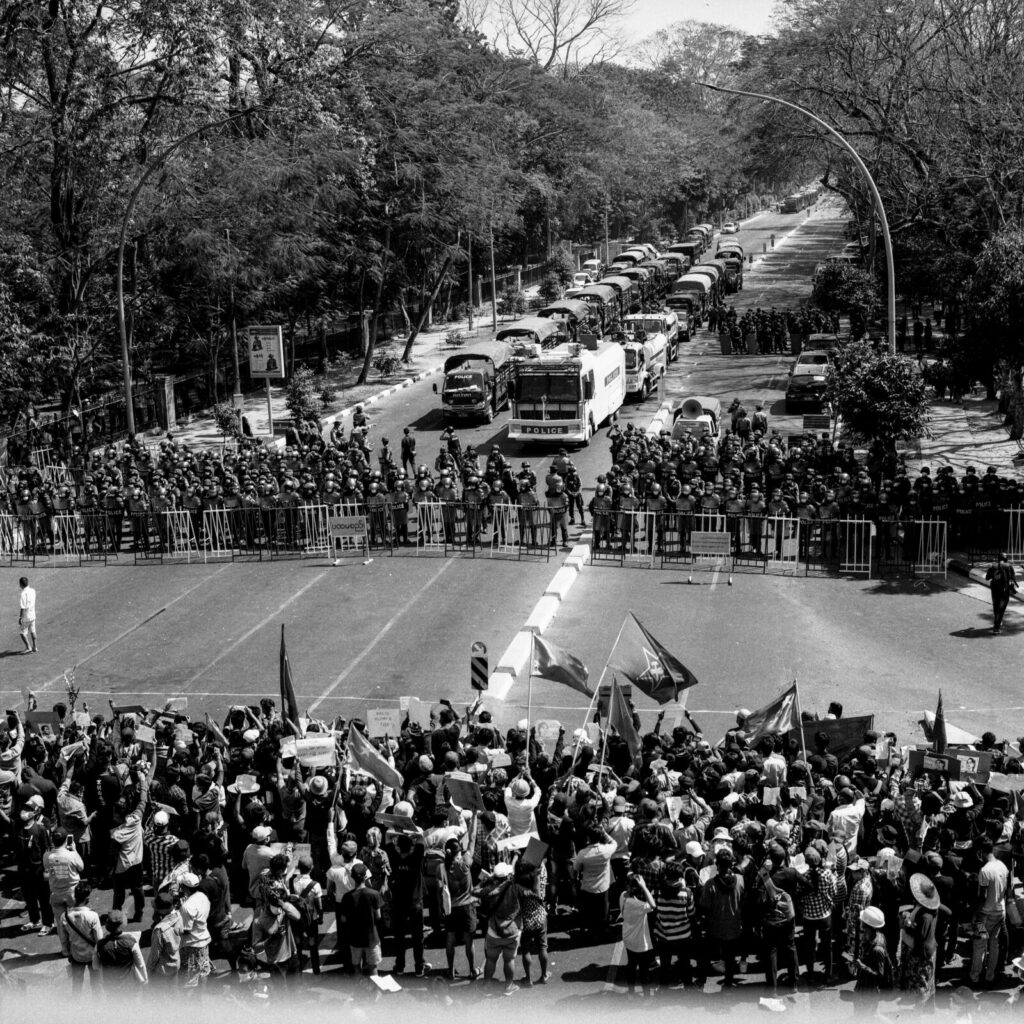
Following the military coup in February 2021, resistance took the form of mass protests throughout the country. Debbie Stothard, a long-term regional human rights activist and founder of ALTSEAN-Burma, said even the older-generation of activists were struck by the scale, “this is bigger than ‘88…there was a greater sense of solidarity [then].” Approximately 4,700 demonstrations were held throughout the first six months following the coup, spreading far and wide beyond the city-centers of dissent, drawing students, civil servants, and ethnic minorities into a shared rejection of the coup. “This is not only a political revolution,” she argued. “It is a social, cultural, and economic revolution.”
The aftermath of the coup was not simply repression but the internal fracture of the state. As the military opened fire on unarmed demonstrators killing over 1,350 protestors in the first year, “a lot of Burman-dominated groups didn’t have the stomach to see young people shot on the streets,” Stothard recalled. The violence expanded into what she described as “interrogation centers where thousands of people were tortured.” Yet the crackdown also altered the battlefield. “This is a military that is not used to being fought with,” she said. “They are not used to armed resistance on this scale.” Some soldiers and police defected, others quietly withdrew.
Following brutal and repressive crackdowns by the junta government, the protests would transform into widespread armed resistance. A documentary photojournalist operating under the pseudonym Ta Mwe described how quickly protests blurred into civil war. “I covered the protests, the military junta, and the crackdowns,” he said. Eventually, Ta was placed onto the watchlist, and was forced to flee Myanmar for Thailand. Since the coup, almost 200,000 people have been displaced to neighbouring countries, including Thailand and India. Three million people remain internally displaced.
In 2026, violence has intensified in conflict zones. Airstrikes, and more recently, drones, have come to define daily life for civilians. People adapted because they had to—makeshift bunkers, displacement, and relocation—routines reorganized themselves around constant threats of attack by the junta. “I’ve seen more destruction, more devastation,” Ta said. “Collective punishment for civilians for allowing the rebels to operate in their area.”
Governance Without the State
Myanmar’s post-coup fragmentation was structured not only along military lines but also by the country’s entrenched social divisions. Ethnic and religious diversity shaped where resistance took hold and where authority was exercised—primarily in minority regions such as Karen, Kachin, and Karenni states. Highland regions, which had long been distant from the state, quickly moved towards armed resistance and self-administration, while urban and lowland areas remained under the junta’s control. What emerged was a coalescence of overlapping authorities and individual priorities that shaped the struggle against the regime.
“I don’t think Myanmar is in transition,” Yale Professor in Southeast Asian Studies Dr. David Moe told The Politic. “If we say Myanmar is in transition, we have to think about its pathway to justice, peace, stability, and prosperity. But that is not the future of Myanmar.” For Moe, the language of ‘transition’ obscures the conditions that have unfolded since 2021. The junta controls the urban areas and parts of the lowlands; resistance forces administer the highlands. No faction commands a monopoly of control. “Myanmar is not really a country,” he added.
As political authority fractured, so did the moral authority that had long underpinned the state. Following the 2007 Saffron Revolution, the military systematically neutralized and depoliticized the Buddhist Sangha—defrocking monks, jailing dissenters, and elevating pro-establishment monks. “By the time the coup rolled around in 2021, the Buddhist Sangha was essentially castrated,” said Stothard. The secular circumstances of resistance were markedly different from previous uprisings. Women, the youth, and minority groups moved to the forefront, no longer constrained by the Buddhist social hierarchies the regime once imposed.
Even as young activists try to distance themselves and the movement from religious language, the junta has continued to weaponize Buddhism for political authority and as a means of legitimacy. “The military regime uses high-profile monks to say that this regime is now in power,” said Moe. “We want to protect our religion, Buddhism, and we want to protect our race, the Bamar majority.” The junta derives power not from a democratic mandate, but by positioning itself as a guardian of a threatened religious and cultural order, aiming to pander both to older generations and the Burmese diaspora.
In areas beyond the junta’s reach, governance has not disappeared; it has been rebuilt. “What we’ve seen in many areas is local people engaged in local governance, reviving social services, civil administration,” Stothard explained. In many resistance-controlled areas, administrators have prioritized health and education while establishing courts, law enforcement, and even jails. In Karenni State, the Interim Executive Council (IEC) implemented a minimum 30% women’s leadership requirement across executive and legislative arms. For Stothard, these institutional developments matter more than territorial fluctuations. “It’s been exhausting, it’s been heartbreaking, but it’s also been very inspiring,” she said. “People don’t see resistance as just fighting back. They see resistance as recreating their society, recreating their governance, recreating their future.”
Yet state-building does not constitute nation-building. For Moe, the central problem is fragmentation. “In the early days of resistance, the ethnic minorities were united as they saw the regime as their common enemy,” he said. “But as the time goes on, the ethnic minorities are not quite united with one another.” Moe further highlights the dissonance between local authorities and the National Unity Government (NUG) of Myanmar, the government-in-exile. Different resistance groups have different visions of Myanmar’s political future.
“The movement is really decentralized,” Moe added. “The challenge really is how they should come together and form a strategic resistance under a centralized leadership, so that they have a more effective way of defeating the regime.” The resistance may be resilient, but its political future is still under negotiation. Meanwhile, the military has sought to resolve that uncertainty on their own terms—through elections designed to secure legitimacy and restore central control.
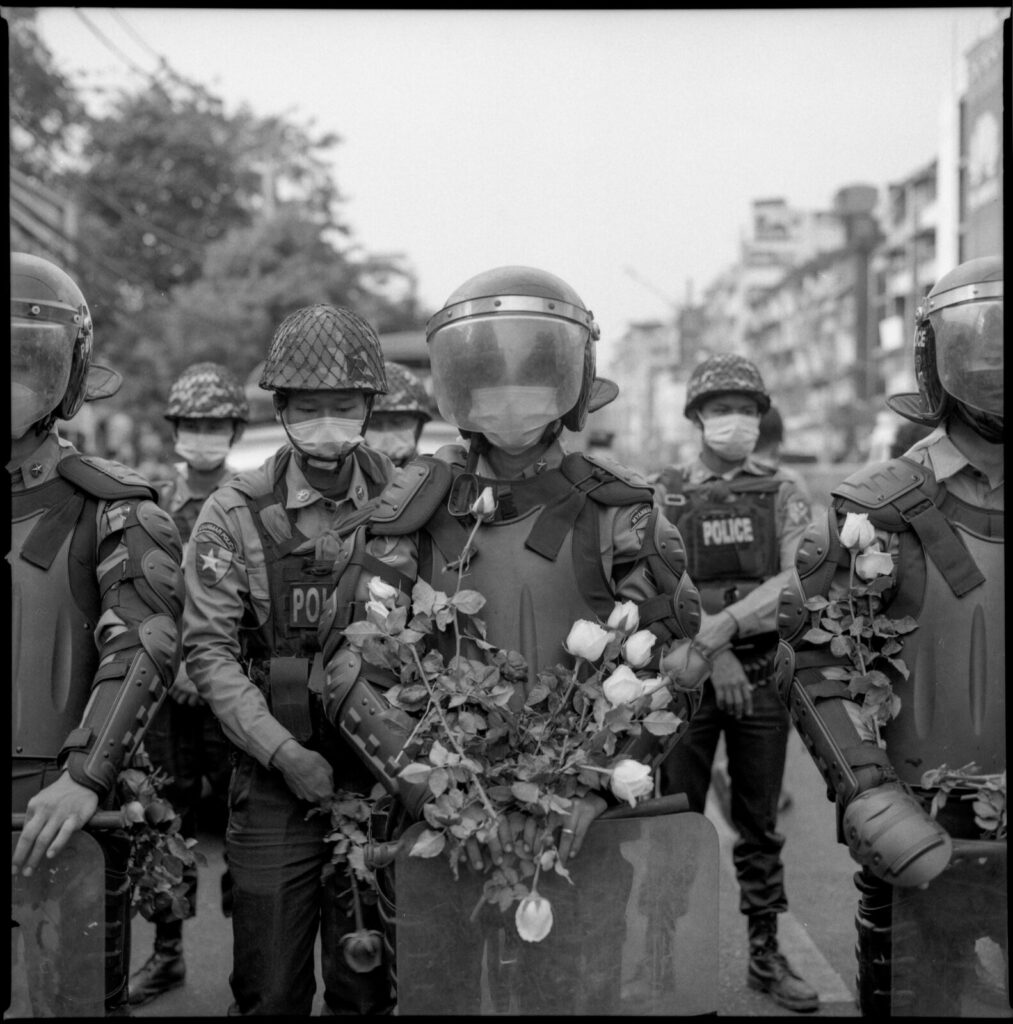
The Illegitimate Election
From 28 December, 2025, to 26 January, 2026, Myanmar’s junta held general elections, though these were widely criticized over claims of fraud. For Moe, the elections were less a democratic contest than a rehearsed performance. “That is not an election. That is selection,” he said. “They already know who will be the leader.” In his view, the purpose of the election is not domestic persuasion but external recognition. “The big goal of that election… is to get legitimacy from the international community,” Moe added. China and Russia have already accepted the junta government, and now the regime is trying to convince The Association of South East Asian Nations (ASEAN) and the West.
On the ground, the mechanics of voter participation have relied less on participation and more on pressure. Stothard described the structures of coercion. “We know who’s living in your household. You’ve got to make sure they come and vote,” she recalled an anecdote from one of her contacts. “If you don’t vote, you’ll be considered as opposing the election, and then you could go to jail.” Stothard described the smorgasbord of intimidation tactics, including threats of forced conscription, revoked passports and exit visas, and checkpoints in the capital where officials stopped vehicles to verify voter registration.
The abuses did not stop at intimidation. Stothard described hundreds of candidates jailed for anti-junta rhetoric and allegations of pre-programmed voting machines favoring the regime. According to her, approximately 20% of townships were excluded from the franchise, and out of the 80% included, townships were gerrymandered to exclude around 30% of the population. “It’s violence, it’s intimidation, it’s coercion, it’s fraud—all bundled into one,” she said.
Yet these intimidation tactics did not translate into votes. In several townships, turnout appeared strikingly low, especially compared to the 2020 elections. One of Stothard’s informants, who had refused to vote until the junta pressured her family, told her that barely a handful of voters had registered on the form. “Most of the people in rebel-controlled areas don’t even realise the election is going on,” said Ta. “For those who were aware of it, they didn’t care at all.” In some rebel-controlled townships, only two or three thousand people voted. “That’s even less than one IDP camp,” he remarked. For Ta, voter apathy was the norm simply because the results of the election seem predetermined.
As voting unfolded, Stothard criticized the focus on electoral standards as overshadowing the situation on the ground. “So when people say, is it free or fair? That’s not the question. It’s irrelevant and ridiculous,” she said. “The issue is about violence.” During the first three weeks of the electoral period, there were 797 armed clashes and attacks on civilians in nearly 50% of all the townships in Myanmar. Ballots were cast as hundreds of airstrikes intensified throughout the country. “Who organizes elections over the Christmas period?” Stothard asked. “People who hope that you will all be on holiday and won’t see what’s happening.” While violence and intimidation failed to persuade voters at home, its real audience lay abroad.
On Foreign Allies
The junta’s durability cannot be understood without Beijing. China maintains deep economic and security ties to Myanmar, from cross-border trade and rare earth mineral extraction in the North to oil pipelines linking China to the Bay of Bengal. Political stability often takes precedence over democratic legitimacy and moral authority. “China doesn’t care about democracy, they don’t care about human rights,” Moe claimed. “They just care about the economy.” To Moe, China remains pragmatically aligned to the junta. “China always looks at who is winning,” he added.
“Myanmar is the backdoor of China,” said Ta. “If the West wants to contain China, this is the key area they should’ve supported a long time ago.” From rare earth minerals to overland access to the Indian Ocean, bypassing the South China Sea, Myanmar’s geopolitical importance stretches far beyond its borders.
China has even stepped in to broker local peace deals in bordering states, aiming to help the junta secure valuable infrastructure and resources, such as the ruby-mining town Mogok in 2025. Seen this way, as long as the junta retains leverage over key territories, China has little incentive to sever ties—and all the more incentive to strengthen them.
Beijing’s support is not only economic. The junta remains one of the heaviest armed militaries in Southeast Asia, sustained critically due to foreign equipment and training. “They have weapons. They have strong China and Russia support,” Moe said bluntly. “That’s why they are surviving so long.”
On the ground, that backing is felt overhead. “There’s constantly something, a drone or an aeroplane in the air,” said Eubank. “Chinese jets and transport [aircraft] used as bombers are dropping 120mm and 81mm mortar rounds on us.” Stothard echoes Eubank’s experience, emphasizing how the ground-based insurgency has turned into an asymmetric air-dominated war, sustained by external suppliers.
Myanmar also looks inward to its ASEAN counterparts for regional security. The Five-Point Consensus has condemned and unanimously rejected the junta, ASEAN’s consensus is symbolically significant. For Stothard, that is not enough. “To this day, ASEAN still does not have an arms embargo,” she said. “When the military started shooting, there was no sanction against the military for that.” Internal divisions between more outspoken, pro-democracy members and those favoring rapprochement further complicate the junta’s relationship with ASEAN. The result is a managed posture: the junta is neither embraced nor effectively restrained.
Beyond the region, the response has been all the more limited. Western governments have implemented targeted sanctions and refused to recognize the sham elections, but over the five years of conflict, attention has turned elsewhere. For Moe, the resistance’s inability to overthrow the junta is not symptomatic of internal issues. “It’s not because of strategic failure,” he said. “But because of the international community’s failure to support them effectively.” Diplomatic statements have not been matched by material and economic commitments. As conflicts in Ukraine and the Middle East dominate headlines, Myanmar and its people risk being sidelined—acknowledged and condemned but never resolved.
Uncertain Horizons
The kyat continues to weaken. Prices of fuel and rice have risen much faster than wages. Electricity flickers for only a few hours each day. Millions of people are displaced, living in temporary encampments across the country. Airstrikes do not pause for elections. Corruption is rampant as institutions squeeze the nation dry for revenues.
“Why do they need revenues? It’s not to rebuild infrastructure. It is to keep bombing the hell out of resistance controlled areas,” Stothard added bluntly. Daily life has collapsed to survival—savings evaporate, families separate, hope erodes. The future feels less like transition than endurance.
“2026 is going to be a terrible year,” she said. “It’s going to get worse before it gets better.”
For many Burmese, the war now unfolds in a kind of silence. Headlines fade, and diplomatic statements blur together. International involvement feels distant, conditional, and abstract.
“They feel more forgotten because the world has not stepped in,” Eubank said. “But in spite of all of that, I see a resolve—amidst the tears, the sadness, the fear, and the disappointments—that we will continue to try to change Burma because we have no other choice.”
“Even if we die in the process and don’t see freedom come to this land, we have shared love together, we have walked in freedom together…I put my hope in God that one day Burma will be free, and I’m grateful we can be a small part of it.”