
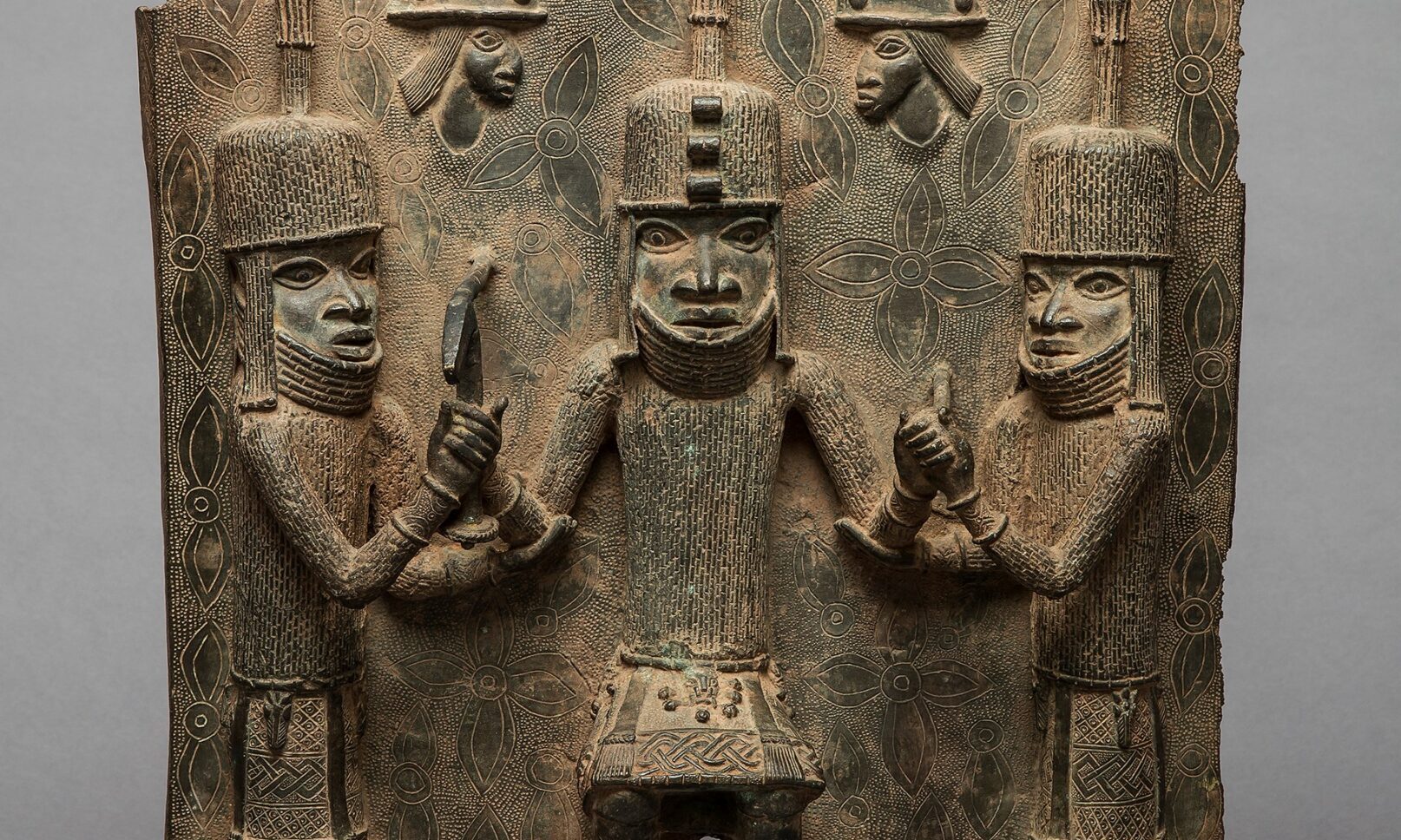
One of the Benin Bronzes looted from the Kingdom of Benin during the 1897 punitive exhibition of the British – a brass relief plaque showing a King with two dignitaries, from the 17th century. Unknown artist of the Kete / MARKK. Paul Schimweg / MARKK.
***
“It is the only piece of art I have seen that I feel has looked me in the eyes and silently asked me, ‘Can you take me home? I am a prisoner. Take me home,’” described Kenyan professor George Abungu.
Abungu is a Cambridge-trained archaeologist and museologist, Kenya’s former representative to the UNESCO World Heritage Committee, and former Director-General of the National Museums of Kenya. The sacred artifact is a mask removed from the Democratic Republic of Congo around 1905, now housed in the Museum am Rothenbaum, Kulturen und Künste der Welt (MARKK) in Hamburg, Germany.
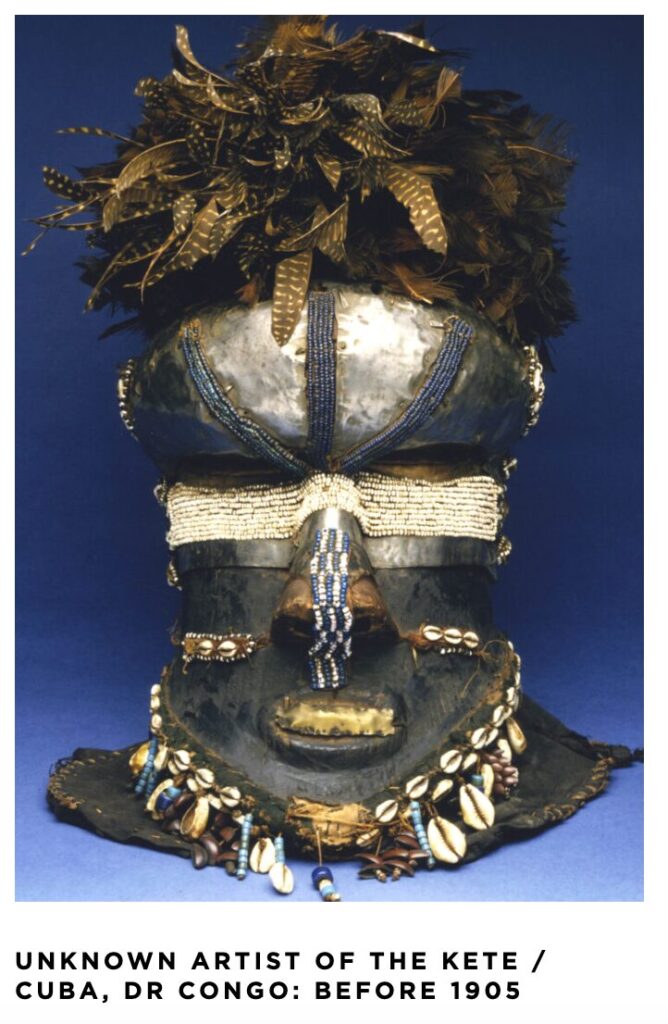
Millions of objects like this one remain trapped in the glass cases of European and North American museums, separated from their communities of origin. Not all of these artifacts were looted or illicitly trafficked; many were gifted or removed under the pretext of research, contributing to the rise of encyclopedic museums that collect and display artifacts from diverse cultures and time periods. Today, repatriation debates are garnering international attention, as communities around the world increasingly demand the return of their cultural heritage. It is not only a matter of legal ownership, but of cultural restoration and historical accountability, pushing responsibility onto museums and emphasizing institutional decolonization and reform.
What Is Repatriation, and Why Is It So Complicated?
Repatriation refers to the return of cultural property and ancestral remains to their communities of origin. From the Smithsonian in Washington D.C. to the Rijksmuseum in Amsterdam, museums have begun to return contested items at scale. In 2024 alone, the Smithsonian National Museum of Natural History made 73 Native human remains and 445 Native funerary objects available for repatriation.
Up until a few decades ago, repatriation was considered chiefly a legal matter: either something was looted and clear legal guidelines mandated its return, or there was no real case for its repatriation.
United States v. Schultz set important legal precedent for illicitly trafficked objects. In 2003, antiquities dealer Frederick Schultz was convicted for removing cultural artifacts from Egypt without the consent of the government. Because Egypt had legal claims to all undiscovered antiquities, and the artifacts were removed in violation of Egyptian state law, the ruling claimed that U.S. courts could treat them as stolen property. It was a landmark case because it established, for the first time, that foreign patrimony laws could render artifacts “stolen” under U.S. law, specifically under the 1934 National Stolen Property Act.
Columbia Law professor Jane Levine explained that, “We established some really strong precedent in the legal world with this case, which is now accepted pretty much worldwide as the way to view trafficking in cultural heritage.” Levine spent 10 years as an Assistant United States Attorney with the Southern District of New York, where she helped prosecute many cultural property trafficking crimes. “The cases are very hard to prove, though, and have somewhat limited application,” she continued. “You have to have some pretty persuasive proof, especially for a criminal case, of when exactly the object left the country. You also have to prove that the object was taken after the passage of the corresponding [foreign patrimony] law.”
For centuries, plundering artifacts from colonies or defeated enemies was entirely legal and commonplace. As Levine crystallized, “You’re hard pressed to make the case that much of the stuff that’s in European and American museums was stolen in a legal sense.” In 1897, for instance, the British looted vast quantities of artifacts from the Kingdom of Benin—most notably the Benin Bronzes; however, the British punitive expedition to Benin did not technically violate any international law. The practice of repatriation was codified internationally for the first time two years later in 1899 with the Hague Regulations concerning the Laws and Customs of War on Land, but even then, the African continent was largely excluded.
There has been some legislation in recent decades that has attempted to address the moral complexities involved in repatriation, beyond only the explicitly stolen artifacts that Schultz applies to. For example, the Native American Graves Protection and Repatriation Act of 1990 (NAGPRA) expands beyond clear legal cases of looting to encompass broader ethical questions of cultural preservation. NAGPRA requires federal agencies and museums receiving federal funding to return all Native cultural objects. This process involves consultation with Native Nations on a case-by-case basis, described as tedious and lengthy, yet crucial. NAGPRA demonstrated that cultural affiliation and spiritual significance can constitute legitimate grounds for return.
A more recent effort to prioritize this kind of cultural sensitivity and nuanced approach to repatriation was French President Emmanuel Macron’s 2017 speech in Burkina Faso, pledging to make the repatriation of African heritage a priority. Few tangible actions have followed thus far, but his speech has urged other governments and museums across Europe to reevaluate their ethical handling of cultural property and start thinking about cultural preservation through a more multidimensional lens.
Artifacts as Living Cultural Entities
To museologists like Abungu, many of these objects are not merely historical artifacts, but also have active ceremonial functions and living communal value. They were never meant to be treated as relics. Western museum professionals and conservators often trivialize this, subscribing to the view that cultural artifacts need to be isolated behind glass and materially preserved. “I’m African, but I’m Western trained, and part of the Western training was to cut me off from my belief systems and make me believe that these objects are dead,” Abungu explained.
For Native communities, returning artifacts to their original context restores their active cultural and spiritual functions. Kay Kkendasot Mattena, a citizen of the Citizen Potawatomi Nation and Program Associate of the Association of American Indian Affairs, illustrated that, “For many Native Nations, belongings re-awaken when they are returned. They’re put back in use almost immediately in some cases.” For instance, drums. “As soon as they come home, Native citizens celebrate with the drum. They redress the drum, they clean it as they would a loved one, they sing and dance around it, they drum on it. They put it back to use.”
The return of these objects also means the return of the knowledge, wisdom, and memories that accompany them. Mattena explained that Native Peoples are “able to relearn and reclaim traditional life ways from getting these belongings back home. There are seeds that have come home that have led to communities being able to grow foods that they haven’t been able to grow for thousands of years. There are basketry techniques that have been able to come home because a single basket returned home. These objects carry so much knowledge within them, and they also carry the spirit of the Ancestor that made them.”
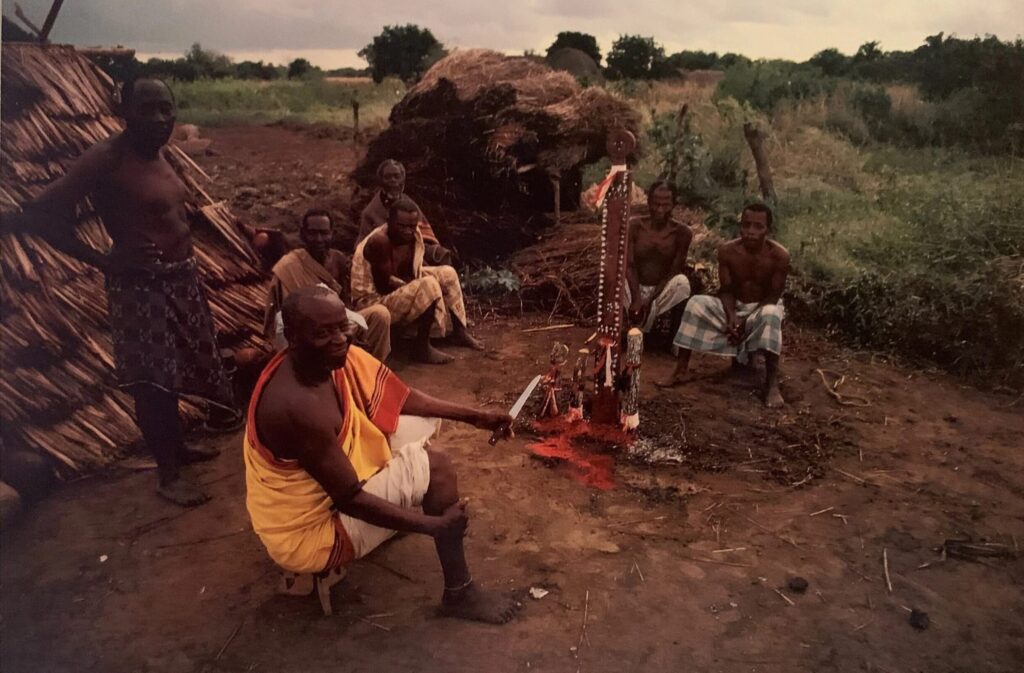
The functional absence of objects with ancestral links can have disastrous effects on communities. For the Mijikenda people of Kenya, sacred statues named vigango—believed to house the spirits of deceased elders—are essential for maintaining ancestors’ active roles in guiding family and community life. Largely held in the National Museums of Kenya today, the vigango’s absence from family homes is deeply felt. “When you take that object and put it away in a museum, you are basically killing the soul within it. These are not dead materials,” Abungu emphasized.
The Role of Museums
A common thread that emerges is the need for collaboration—whether that is between museums and source communities, Western and non-Western museums, governments and universities, partnership must take priority.
Professor Rudo Sithole, previous director of the Natural History Museum of Zimbabwe, now leads The African Museums and Heritage Restitution (AFRIMUHERE), an association established in Kenya in 2021. Sithole noted the unequal power relations that still exist as a legacy of colonialism and emphasized the necessity for “strong, sincere collaborations between museums in the Majority World [i.e. the Global South] and museums in holding countries, so that we can work together to change some of the [entrenched] colonial narratives.”
AFRIMUHERE was founded after American donors approached Sithole wanting to champion African repatriation—a cause Africans themselves were demanding representation for. Members of AFRIMUHERE hail from several countries across Africa, and the association’s work spans continents. “Last year alone, I was invited to seven international meetings, be it UNESCO or the African Union. We also worked with the U.K. Parliament on issues of repatriation, especially of human remains and why they should be returned,” said Sithole. “But we need more funders. We need more activists. We need more professionals.”
Johanna Wild, Chief Curator at Museum am Rothenbaum, Kulturen und Künste der Welt (MARKK) in Hamburg, believes that the first step in decolonizing Western museums is the prioritization of “accountability and striving for transparency.” This ranges from expanding MARKK’s online database to widen public access to their collections, to increasing funding for provenance research and, of course, repatriations. Simultaneously, “We feel it’s still important to continue working with these collections, creating exhibitions and programs and supporting research to make these histories known and to contribute to an appreciation of these collections among the public,” said Wild. There is a delicate balance between repatriation and the continued stewardship of cultural property by museums, which has the potential to be constructive.
Once again, collaboration is at the heart of museum reform. “As a curator, I conceive of myself as a facilitator. We always work in collaboration with different stakeholders. They might be descendants of source communities, contemporary artists working through similar issues, or diaspora communities within [Hamburg] that have an interest in specific collections,” Wild elucidated. “[We] try to conceive of exhibition concepts together, or respond to research requests. In a curatorial position, what is important is that you’re listening more than speaking.”
A recent exhibition she referred to was entitled Hey Hamburg! Do you know Duala Manga Bell?, intended to “engage the topics of racism and colonial heritage for young people and families,” according to MARKK’s website. It tells the story of Rudolf Duala Manga Bell, a young Cameroonian king who rebelled against the German colonial government. “We intended to narrate family histories to show on a very personal and emotional level what colonialism does,” Wild explained. Princess Marilyn Douala Manga Bell represented the family on an advisory board composed of multiple historians and activists. “This was a really important exhibition where we tested out: how do we work with different stakeholders? How can we combine working with activists in the city, scholars, but also family members that are personally affected by specific histories?” This exhibition is a testament to the positive impact museums can have when operating justly and collaboratively.
Professor Laura van Broekhoven is the Director of the Pitt Rivers Museum at the University of Oxford and a member of the Dutch Advisory Committee on Repatriation of Colonial Collections that advises the Dutch Ministry of Culture. In her role, she works at the intersection of institutions, encompassing museum work, education, and government.
“It’s difficult for governments, because governments want to follow procedures [and] policy, and there’s not that much wiggle room [or] open-endedness that is possible,” van Broekhoven explained. Museums are not particularly flexible either. They have been compared to cruise ships and elephant herds: “It’s very hard to make a cruise ship change its course.” Van Broekhoven specified that “you really need to be willing to take [reform] on a case-by-case basis, and sometimes that means that there’s years where you might not be able to do anything.”
Once again, collaboration is of the utmost importance. “Sometimes communities need you to leave them alone, and there might not be a possibility for reconciliation. But in other cases, the community really does not want us to shut our doors or stop being involved. They really want relational accountability. They want us to have real partnerships that go beyond just returning objects and that being it.” Above all, what’s needed is “a focus on healing, on reconciliation and a real care for the ancestors.”
Furthermore, many university museums have the benefit of not being financially driven solely by exhibition production. “Research is a big income generator for us because of the grants that we can get. That way, you’re not fighting with your marketing department all the time. You can work hand in hand.” Therefore, exhibition narratives and research can more directly engage with colonial histories and repatriation debates, rather than being constrained by commercial priorities.
Western museums are not the only ones that can serve as sites for cultural heritage conservation. Mattena emphasized that “we really work to uplift Tribal Museums as being the sole source, the primary resource, for historical knowledge and for Traditional Knowledge on Native Peoples.”
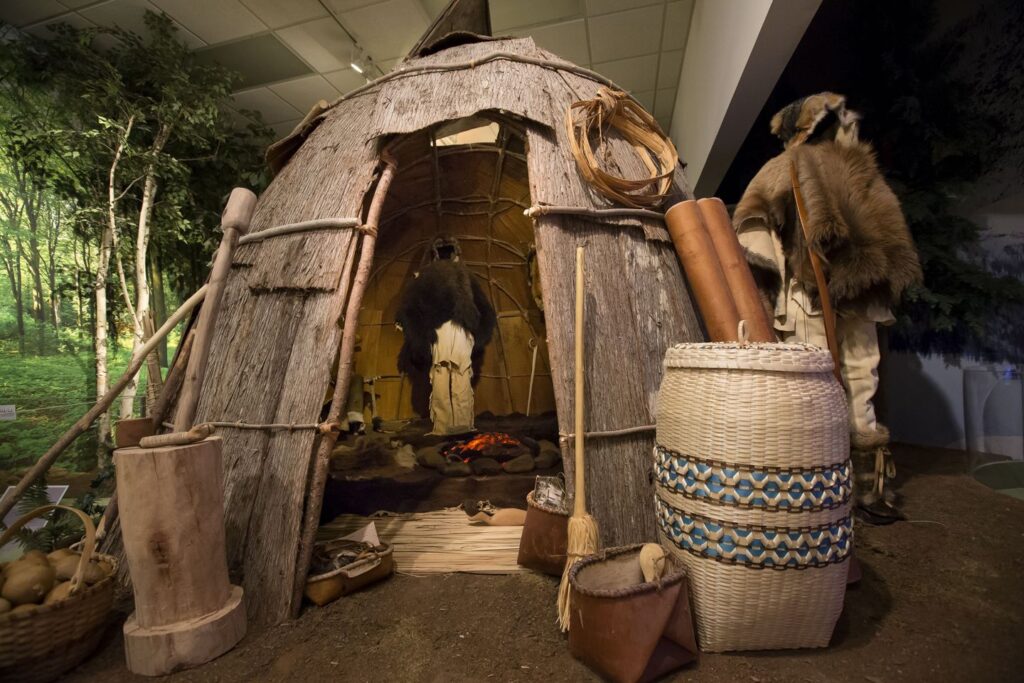
“We do everything out of [the Citizen Potawatomi Nation museum].” From Veterans talking circles, to drum circles, crafts, and sewing classes, the museum is a vital cultural center. Mattena, who is conversationally fluent in Bodwewadmimwen—a Central Algonquian Language—and serves as a Language Apprentice with the Citizen Potawatomi Nation Language Department, “spent two months in Oklahoma, primarily living in that museum while I studied the language.”
“It is a space where we can be with our history, but it’s also a space for us to just be, and to be with each other. It’s really a community hub. From what I’ve seen working with other Tribal Museums, many operate very similarly. They are places where community can come together, just as much as they are places that share knowledge with the general public.”
***
Ultimately, the repatriation of cultural heritage is as important, yet complex, as ever. Legal claims alone are insufficient; repatriation is a moral question of reparative justice, mandating an approach defined by reconciliation and compassion. Museums have the potential to be constructive spaces, but Western museums must be decolonized and reformed in a way that will not happen overnight. Nonetheless, a gradual shift in attitudes—whether of museum professionals, government agents, or educators—is beginning to occur, sowing the seeds for the slow but necessary beginning of progress.