
This piece was written for The Future of U.S.–China Relations, a joint special issue by The Yale Politic and Tsinghua Youth Voice.
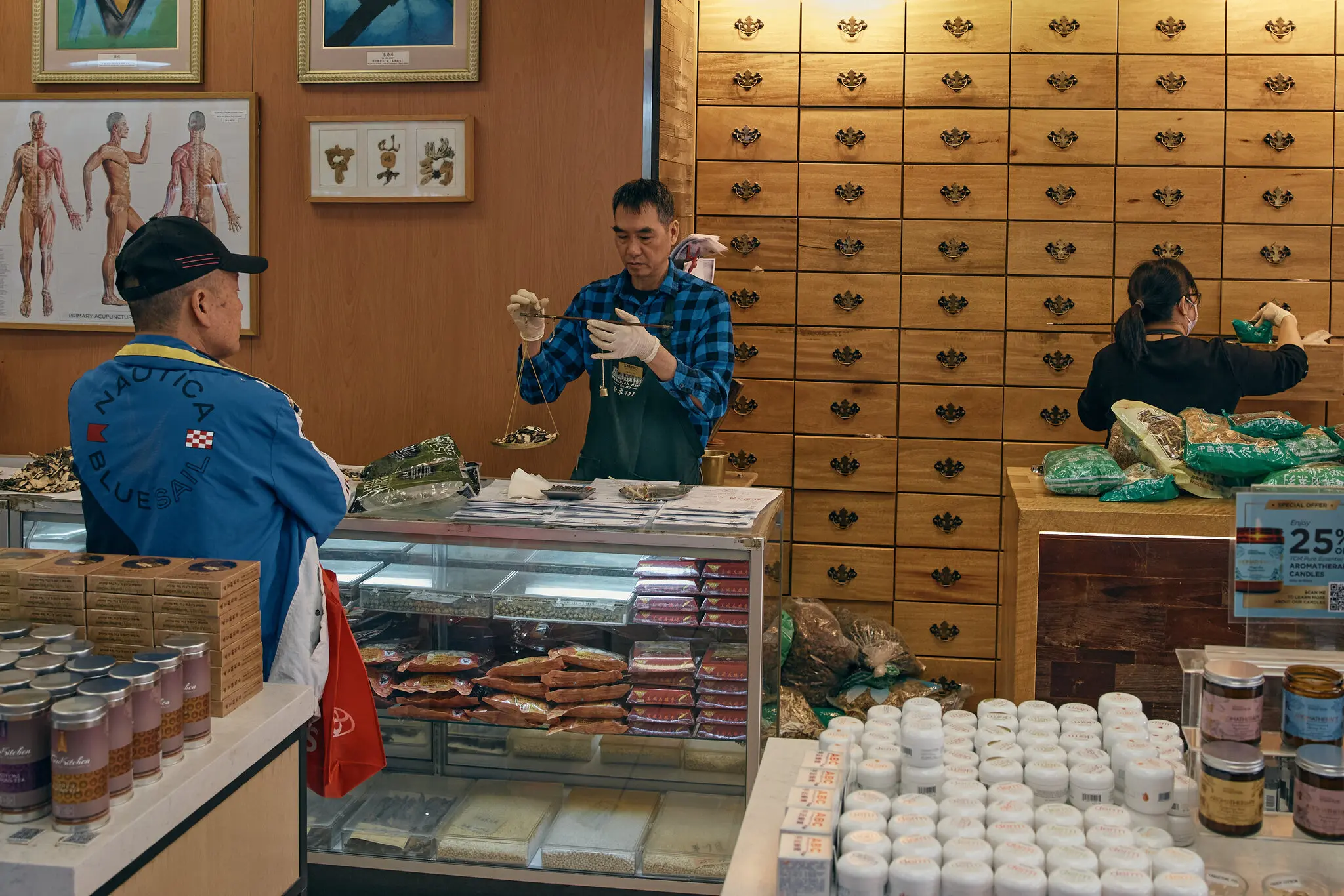
“When we move to a different place, we feel our identity is interrupted. We hold on to the things that we can hold on to in order to claim who we are,” recalled Professor Elain Hsieh, a Taiwan-born sociologist investigating the endangered practice of Traditional Chinese Medicine (TCM) in the cultural enclaves she calls home. Of the “things” preserved, perhaps the most pertinent among immigrants of Chinese heritage are the virtues of this Confucian proverb.
“譬如為山,未成一簣,止,吾止也”
“The mountain is only as finished as the spirit is still”
On the kitchen stove of a Chinese American household, a Grandma revives an 1,800-year old empirical recipe: Huang Qin Tang. The formulation is elementary: Huang qin (scute) serves as the principal herb to cool inflammation and drain damp-heat from the body. It is accompanied by bai shao (white peony root), gan cao (chinese licorice), and da zao (jujube fruit) to relieve maladies of the gut. As the solution reaches a boil, the familiar, earthy bitterness of herbs fills the air; she knows it is ready.
During China’s most prosperous dynasties, this recipe was served to emperors to treat major gastrointestinal ailments. Today, scientists investigate it as a life-saving complementary medicine for cancer patients. Under this roof, however, it serves a humbler, yet equally meaningful purpose: soothing a grandchild’s stomach ache.
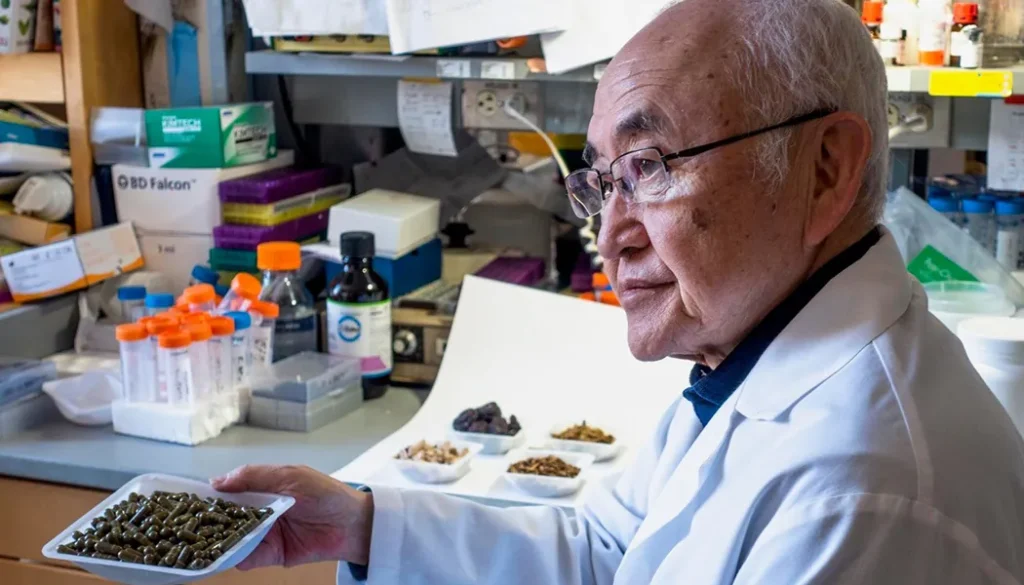
Huang Qin Tang, referred to in the pharmaceutical industry as YIV-906, is an example of a Traditional Chinese Medicine (TCM) that is actively being subjected to the rigors of the Western science. While exploring the East-Asia archives of Sterling Memorial Library at Yale, Professor Shwu-Huey Liu rediscovered the formulation in a revered manuscript from the Eastern Han Dynasty (200 C.E): Shang Han Lun (On Cold Damage).
Since then, father-son co-founders Professor Yung-Chi Cheng and Mr. Peikwen Cheng have been building on the work of their ancient colleagues. Their clinical-stage biotechnology company, Yiviva, aims to commercialize TCM by “using modern tools to open up the black box,” and translate tradition into a globally recognized science.
With their flagship drug, YIV-906, the duo have successfully navigated the complex manufacturing of botanical medicine according to Good Manufacturing Practice standards, consistently shown biological and chemical activity, cleared FDA Phase I safety barriers, and recently demonstrated promising results in Phase IIb clinical trials as a complementary medicine for liver and colorectal cancer. Despite this empirical validation, skepticism regarding the role of age-old remedies in the United States remains.
***
In an interview with The Politic, Professor Hsieh encouraged entertaining the skepticism for a moment. “Whether the critics are right or not, does not matter,” she argued. “There is a lot to the practice of TCM, and being a medicine, in the Western sense of the term, is the least important aspect of it.”
If we set aside the millenia of clinical success, what remains is tremendous cultural and social value. For instance, among the elderly generation of Chinese American households, the practice has been less about fighting pathogens than about embodying the aforementioned Confucious proverb, to resist xián (idleness) and continue building the shān (the mountain).
“If I’m the grandma, TCM is knowledge that I can share with my grandchildren to make them a part of me,” Hsieh explained. These at-home apothecaries are driven by a desire to contribute to the close-knit family atmosphere, asking “how can this make grandchildren feel better? How can it bring something valuable to the family?”
Professor and fellow TCM sociologist Professor Haiying Kong agreed, framing these acts as a defense against cultural dilution. In a country where “kids are losing more and more of their Chinese culture and identity by conforming to Western-centric views,” Kong believes that this form of caretaking is a source of empowerment for the elderly. In her research, she observed “a growing generation gap where young Chinese people born in America often feel like [they] know better because they have the latest knowledge.” This is a rare incident where seniority, “in being a Chinese person and being a grandma, makes them the undisputed expert.”
For these families, TCM “is a social connector” quintessential to the survival of Chinese culture. It demonstrates to children, in a tangible way, “this is how Chinese people take care of one another; this is how Chinese people think about their health; this is how we understand and control our body.”
For the patients, Professor Hsieh noted that “the value in TCM is often about fear.” In low-stakes scenarios, such as a simple stomach-ache, children prefer home-brewed tea to mass-produced pills because of the comfort it provides in soothing that apprehension. “It is no different than in the West. If you get sick, you want to have your grandma’s chicken noodle soup. You can have Tylenol; you can have Nyquil. You know, it will take care of you,” Hsieh said. “But what you really want is chicken noodle soup made by your grandma, and that means something very different.”
On a more somber note, Hsieh has also been in the same room as patients who are told “there is no cure.” When conventional options run out and “doctors don’t know what to do,” people in Western culture frequently cling to religion; in the Chinese American communities that Hsieh works with, people turn to TCM.
Hsieh conceded that this desperation creates opportunities for insincere practitioners to sell false hope. She recalled a close friend’s father, who “spent a fortune going back to Hong Kong to get TCM treatment” for his aggressive pancreatic cancer, which ultimately “did not extend his life.” Yet, through the lens of the individual, she believed that “for them, it is always worth it.”
Indeed, even staunch advocates for science-based medicine agree that while medicine is important during these moments, patients need to trust in something beyond the finite power of doctors. Dr. Paul Offit, an American pediatrician and vocal critic of alternative medicine, joked that his own “mother was a big believer in chicken soup.” At the Children’s Hospital of Pennsylvania, his place of work, he observed, “We also have chaplains in our Hospital going around and praying with people, and I think that helps too.”
He acknowledged that “the placebo effect is real and it’s powerful.” Whether a practice has measurable clinical benefit can be besides the point: “There’s a lot to be said for positive attitude,” and in that sense alone, alternative solutions like religion and TCM are worthwhile.
Offit’s stance is frequently misconstrued; rather than demanding an FDA trial for every practice, his primary criterion is the Hippocratic mandate to “first, do no harm.” If a TCM is benign and “does not interfere with any [conventional care],” its role in a patient’s wellbeing— clinical or cultural—is worth preserving.
***
In her work with Chinese diaspora patients, one major challenge Kong observed is that, out of fear of judgement, “people tend to say they don’t take [TCM].” Dr Ting Bao, an integrative oncologist at Dana-Farber Cancer Institute, explained that “almost the first thing a medical oncologist here in the US asks is whether TCM is going to interact with chemotherapy.” TCM patients may feel better only because certain “herbs reduce the concentration of chemotherapy, and that’s concerning.” Her department employs clinical pharmacists specifically to ensure herbs do not interfere with radiation or surgery. For them, it is paramount to correct the stigmas which drive Chinese Americans towards nondisclosure.
This danger has been aggravated by heightened geopolitical tensions with China that have made sourcing reliable TCM in the U.S. increasingly difficult. Because most botanical components of TCM are cultivated under specific ecological conditions indigenous to China, the nation holds a 40% share of the global herbal medicine market. When the ability for Chinese Americans to affordably access a cultural priority is contingent on a volatile geopolitical relationship, they turn to unverified sources.
Kong, both an expert on TCM and a consumer, recounted a pandemic-era where “herb prices jumped, skyrocketing,” to such prohibitive levels that vendors could not afford it. Ultimately, “it was out of stock everywhere, and people sought alternatives.” Hseieh was one of those people who “jump[ed] through the hurdle of ordering it from alternative sources” as her local “mom and pop stores disappear[ed]”
In 2024, the New York City Health Department, issued a public health warning after a routine store survey found eight locally purchased TCM products to contain lead concentrations of up to 73,000 parts per million (ppm), far above the legal limit.
When visited by the New York City Health Department, most store owners were compliant, said Dr. Paromita Hore, Director of Environmental Exposure Assessment and Education. “They acknowledge and understand, because they, themselves, do not know that they have harmful levels of heavy metals in their products.” This disillusionment, where sellers and customers are equally oblivious, exposes a pressing systemic oversight, one that in Dr Offit’s view, requires government regulation.
Pointing to the Dietary Supplement Health and Education Act (DSHEA), the law that created loopholes to allow the supplement industry to bypass the rigorous safety testing, Dr. Offit asserted that he would “like to see [TCM] held to the strict Good Manufacturing Practices required of other medicines.”
***
Unfortunately, these community and expert calls for accountability collide directly with the U.S. administration’s agenda. As China gains dominance in the pharmaceutical industry, a field prioritized as a “hard” science, the disparity in access to safe TCM has been fueled by a dismissive binary that marginalizes the discipline as a “soft science.”
This disregard is evident in President Trump’s FY 2026 Budget Request, which proposed entirely eliminating the National Center for Complementary and Integrative Health (NCCI). This move would slash the NIH’s sole subsidiary for TCM research and fold it into a broader National Institute on Body Systems (NIBS).
While Health and Human Services (HHS) Secretary Robert F. Kennedy Jr. has championed alternative therapies amidst the growing body of evidence from scientists like Professor Cheng, there is a disconnect between the HHS secretary’s rhetoric and the administration’s fiscal policy. As alternative medicines are forced to vie for resources alongside more established institutes that would too be incorporated within NIBS, dismantling the silos that protected TCM as a standalone category, experts foresee institutional marginalization.
In such political contexts, resistance to TCM often stems from its unfamiliarity to Western audiences. At its core, the tradition views the body not as a collection of isolated mechanisms to be targeted with precision medicine, but as an integrated system governed by the balance of Qi, Yin, and Yang.
Beyond ensuring the safety of millions of Chinese Americans, studying and regulating TCM is critical from a national security perspective. Despite historically adopting a reductionist approach to target specific pathogens or receptors, modern oncology is increasingly pivoting toward holistic models that mirror TCM principles.
Professor Cheng explained that “tumor cells are heterogenous,” so focusing on one single phenotype “won’t wipe out all cancer cells.” As such, the “average cancer patient today uses a cocktail of drugs: a few to kill the cancer and, due to cytotoxicity, a few more for the side effects. Yet, none of them, alone, are doing anything much.” For decades, oncologists have said that “there must be a better way.” To this end, TCM offers the established framework that Western oncology is striving for.
Even under the more generous Senate appropriations bill, which rejected the NCCIH’s termination, the Center receives only $170 million of the NIH’s $48.7 billion budget—less than 0.35%. This figure stands in stark contrast to the field’s impact on Chinese American communities and its potential to lead the next human health advancement.
***
To understand this paradoxical neglect of TCM research, one should first trace a drug from an academic lab to the market. Before being sold domestically or licensed internationally every medicine must survive the rigorous Good Clinical Practice standards established by the International Council for Harmonisation (ICH).This entity, of which both China and the U.S. are members, has shifted the pharmaceutical race from “who discovers a drug first,” to “who can prove it works effectively and safely.” One country might make the discovery, but another might win by being the first to prove it in a clinical trial.
Since World War II, the U.S. has led the world in medical innovation. However, a bottleneck has persisted. The 1980 Bayh-Dole Act bridged the initial gap between academia and consumers by allowing the spin off taxpayer-funded research into profit-seeking ventures, usually through universities licensing patent rights to companies that would, in turn, fund clinical trials and bring a drug to the market. This incentivized private investors to finance clinical trials.
Despite lending the U.S. early success, this model is vulnerable. A breakthrough discovery in a U.S. university lab waits an average of eight months for a technology transfer office to find a commercial partner. Identifying this as a rate-limiter, China’s National Health Commission passed measures enabling academic physicians at top-tier “Class III” hospitals to move breakthroughs—including TCM—directly into human clinical studies at the discretion of in-house ethics committees.
This regulatory maneuver enabled China to complete trials faster than any other nation. The result is a historic turning point. In 2024, China initiated over 7,100 clinical trials, surpassing America’s clinical activity by a gross margin of 1,100 projects. Given that roughly 90% of drugs fail in clinical trials, an efficient human proof-of-concept model is the ultimate competitive advantage.
By testing U.S. discovered biological targets and sidelined TCM first, Chinese teams secure the first-in-human data and global patents, forcing U.S. biotechnology companies to pay nine-figure sums to license back American ideas proven abroad.
One recent example of this is ivonescimab, a PD-1/VEGF bispecific antibody. Despite the two cancer targets having largely been characterized by U.S. scientists, Chinese researchers produced the first clinical results. Summit Therapeutics, a California-based biopharmaceutical group, later paid $500 million upfront for rights to develop and sell the drug outside of China.
Today, China’s first-in-class capabilities are second only to the U.S, representing 30% of the global innovative pipeline. As its chokehold on the industry slips, the nation’s response has fallen short. Between 2024 and 2025, the Federal Drug Administration (FDA) experienced a decline in approvals from 50 to 46. This is partly due to staffing declines experienced over disagreement of agency initiatives. For instance, in 2025, Dr. Offit, a long-time member of the FDA’s advisory committee was removed following disagreements with HHS leadership. Offit warns that if the U.S. continues this track of deprioritizing science, it risks becoming an “innovation desert.”
Many of his colleagues have already “said that the future of drug development in this world is China, not the United States. Even though the United States has historically been a leader in doing the innovative research to make drugs like vaccines, that’s not going to be true anymore because of the Secretary of Health and Human Services’ attack on our infrastructure.”
***
The negligence Offit fears extends to any model that challenges the status quo; TCM is no exception. While discussing Yiviva’s goal of expanding beyond oncology into treatments for other complex diseases, including Alzheimer’s, Mr. Peikwen Cheng expressed that he “think[s] there’s a lot of possibilities.” However, the window for America to lead the paradigm shift toward holistic care is closing.
In neglecting the ancient practice, the U.S. cedes hypotheses backed by millennia of longitudinal study. True, the overwhelming majority of the TCM library has yet to undergo comprehensive scientific scrutiny. However, as Yiviva has observed through their clinical studies, this is not to say that they do not possess the potential to do so, if subjected to such scrutiny. The barrier is not a lack of efficacy, but a lack of interest in the experimentation required to prove it.
“We have to take the risk now to lead the competition,” Cheng asserted, hoping that where the “concepts [behind TCM] have been lost in translation, science can bring it all together in the format of a deliverable drug.”
Professor Hsieh added that Yiviva’s efforts are not fundamentally radical. “It is very common for Western pharmaceuticals to find rare chemical elements in an Amazon plant or in some obscure animal and discover that there is actually a medicinal ingredient.” Yiviva’s efforts should be considered no different.
To this point, Dr. Offit, typically a fierce critic of the alternative medicine industry, seceded from his camp’s usual dismissal of remedies such as TCM: “If something is shown to work, great. Some 70% of the drugs that are on the Children’s Hospital of Philadelphia formulary are already derived from natural products.” He concedes that the origin of a proven treatment, be it a Genentech lab or a TCM apothecary, is irrelevant. “Medicine is medicine.”
Still, Hsieh remains cautiously optimistic. While commercialization “is an effective path to making TCM accessible and safe for Western audiences,” she labeled it “a very sad path.” By isolating and encapsulating only the active chemical ingredients, consumers lose the cultural and social elements. As such, researchers at Yiviva risk adopting the very reductionist ideology they sought to dismantle. Hsieh argues that to treat a patient as both a patient and a cultural being, the scientific validation of TCM must be accompanied by policy changes that preserve the ancient rituals giving the practice its soul.
***
From a national security perspective, the current U.S. political agenda towards alternative medicine strikes a blow to the nation’s stance in the global pharmaceutical race that will become increasingly apparent in the coming years. While the U.S. prioritizes politics over expertise, China is aggressively investigating TCMs to solve complex pathologies that Western methodologies have historically struggled to solve, approving 77 new TCM drugs between 2013 and 2024.
For Chinese Americans, however, the impact of this neglect hits harder not as a threat to their health but their way of life. Hsieh emphasizes a critical distinction often lost in political and economic tension: “TCM as a medicine and TCM as a cultural practice and way of life. These are very different things,” she says. For many Chinese Americans, the latter is the more important part.
During their darkest days, when all hope, or even life, seems to be slipping away, most patients are willing to endure extreme discomfort for a slim chance of a few more weeks of life. One metastatic pancreatic cancer patient observed by Dr. Kong endured 23 cycles of chemotherapy. Some fight for these extra moments to say what was left unsaid, others to find peace or toast a final milestone. They fight because:
“譬如為山,未成一簣,止,吾止也”
“The mountain is only as finished as the spirit is still”
Yet, when patients cannot afford to stagger rounds of drug after drug, or when doctors say “there is nothing we can do,” they turn to alternative medicines such as religion, home-cooked chicken noodle soup, and, for a diaspora fighting to keep its heritage alive, TCM.
While not every American will choose to turn to TCM, every American should certainly have the right to do so, safely and accessibly. For millions of Chinese Americans, the familiarity of this lived tradition carries a warmth that no pill can replace, however clinically effective or ineffective it ultimately proves to be. It is difficult to put a price on that intimacy.