
This piece was written by a Yale student for The Future of U.S.–China Relations, a joint special issue by The Yale Politic and Tsinghua Youth Voice.
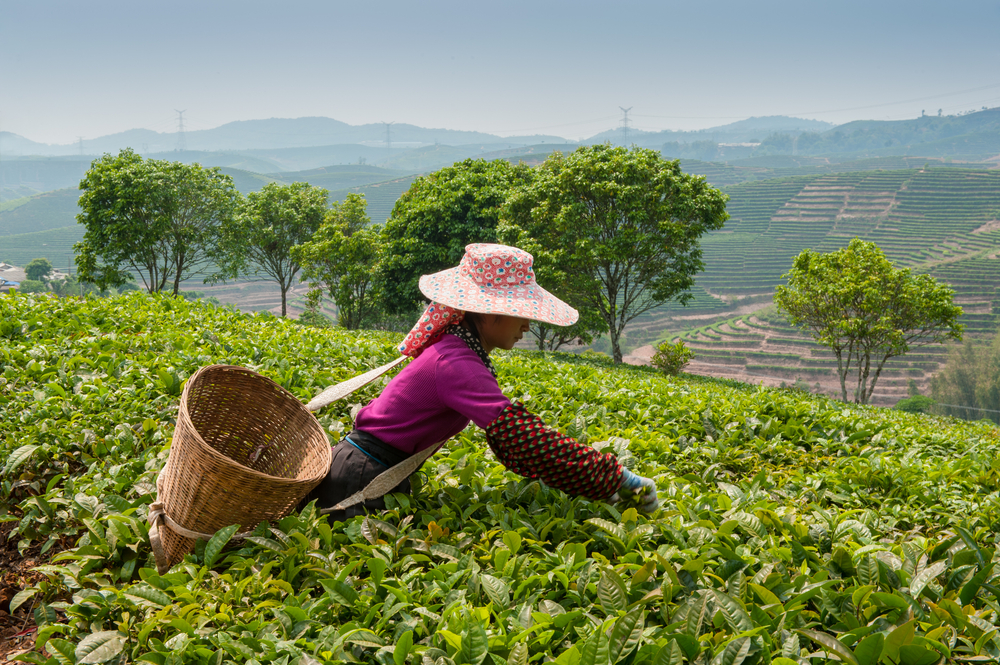
Nestled among the misty Hengduan mountains 40 miles from the Myanmar border, the small city of Lincang occupies an unassuming corner of China’s southwestern Yunnan Province. But for serious tea enthusiasts, the region is anything but obscure: farmers have been cultivating the famous Lincang large-leaf brew since the Tang Dynasty, and today this precious cargo can fetch prices usually reserved for fine wine or aged whiskey.
For the entrepreneurial Kai Li, a former architecture student at Tsinghua University and a Lincang native, this deep-rooted tradition is the perfect source of inspiration for her startup, “山山而茶” (roughly, “Tea from Many Mountains”). Targeting young professionals in their 20s and 30s, Li’s tea brand provides portable kits for those who want a high-quality tea ceremony experience on the go or in the office.
“I launched my tea brand to bring more awareness to my hometown,” Li told me, “but also because traditional tea culture fails to resonate with young people.” As Gen Z and Millennials in China increasingly prioritize self-care and emotional wellbeing amid a hyper-competitive job market and rising costs of living, Li is betting that the demand for mindfulness exercises like tea ceremonies will continue to grow.
Compared with the U.S., China’s startup scene is a less-frequently referenced aspect of the country’s economy. Career stability is a priority for many Chinese, and Li mentioned that she and her friends faced pressure from their families against starting their own businesses (a significant cultural deterrent in a society still influenced—however distantly—by Confucian notions of filial piety).
Li also emphasized that she, like most of her friends, has no intention of scaling her business into a headline-grabbing, Silicon Valley-style corporation: “one-person companies are much more common.” She’s right — there are about 124 million registered individual commercial households in China, most of which are solo or very small businesses.
While these cultural and structural dynamics help explain why the Chinese entrepreneurial ecosystem often attracts less international media coverage, there’s another reason why founders like Kai Li have a hard time scaling consumer-facing startups: these companies are misaligned with China’s venture capital (VC) industry.
Capital for startup ventures can take many forms. OpenAI, for example (the startup behind ChatGPT), has received VC funding from early-stage investing firms Sequoia Capital and Andreessen Horowitz, major tech companies like Microsoft, and high-net-worth individuals like Elon Musk. VC in the U.S. is almost exclusively in the hands of the private sector, and many of the venture firms in Silicon Valley primarily invest in companies that have little to do with U.S. national security. Things work differently in the People’s Republic of China (PRC).
In line with Beijing’s industrial policy of “Civil-Military Fusion” (军民融合), municipal and regional governments across China have spent the past 20 years developing an ecosystem of financial instruments designed to align VC with national priorities. Most prominent among these are Government Guidance Funds (GGFs): public-private sources of capital that channel VC investment into sectors deemed strategically important, from semiconductors and artificial intelligence to clean energy and advanced manufacturing. For example, China launched a brand-new national venture capital guidance fund in late 2025, aiming to direct over $140 billion towards early-stage and “hard tech” innovation.
Collectively, GGFs have become one of the most influential pillars of China’s venture capital industry. While there are some fully private and commercially oriented VC firms in China, in practice, operating as a successful venture capitalist in the PRC often involves accepting state-linked money — and with it, state-defined investment priorities.
GGFs do not usually select individual startups themselves. But as investors in private VC funds, GGFs often impose contractual conditions on how that money is spent, steering Chinese venture capitalists toward sectors aligned with national development goals. The effect is VC concentration in geopolitically strategic industries, while consumer-facing startups (wellness tea brands, for instance) receive far less early-stage funding.
While instruments like GGFs have been deployed primarily domestically so far, they demonstrate Beijing’s comfort with using early-stage finance as a strategic tool. In an era of growing friction between the U.S. and China, PRC decision makers may be eying a new territory for VC-as-statecraft: Latin America.
Beijing’s Expanding Footprint in America’s Neighborhood
China’s growing presence in the Western Hemisphere has become one of the most visible fault lines in contemporary U.S.-China competition. Over the past two decades, the PRC has expanded its regional footprint through infrastructure finance, commodity purchasing, and large-scale energy and logistics projects. China is the primary trading partner for the South American continent (having economically displaced the U.S. in 10 out of 12 of those countries), and the PRC has added over 20 countries in the Western Hemisphere to its “Belt and Road” infrastructure development program since 2017.
Some of Beijing’s influence in the region also has a militarily strategic edge: the PRC now maintains more dual-use space infrastructure in Latin America than anywhere else outside mainland China, and it also controls a dominant position in Latin America’s export market for critical minerals and metals. For example, China is the primary destination for Latin American exports of lithium (the metal used in the batteries that power everything from electric cars to the made-in-China battle drones killing soldiers and civilians in Ukraine). 72% of unprocessed lithium extracted in Chile—the largest Latin American lithium producer—heads to China each year for refinement.

The November 2025 U.S. National Security Strategy seems, in part, a reaction to this growing Chinese presence in the Western Hemisphere. It outlines a Trump-era rearticulation of the Monroe Doctrine, the 1823 U.S. foreign policy that declared the Americas off limits to extra-hemispheric influence. And as the ousting of Nicolás Maduro would suggest, the current administration is willing to assert its new “Donroe Doctrine” with military force in addition to diplomatic pressure.
Corporate Strategy vs. Special Forces
Paul Bracken, professor emeritus at Yale and a longtime analyst of U.S.-China relations, emphasizes the asymmetry between American and Chinese diplomacy in Latin America. In a conversation with The Politic, Bracken described how the U.S. operation in Venezuela highlights this difference. “We tend to be very good at sending in special forces,” he said, “but the Chinese send in businesspeople for decades to sell things and lock up contracts.”
On January 3rd, 2026, Delta Force seized the sitting president of Venezuela in a matter of hours, fracturing the “all-weather strategic partnership” that China had enjoyed with the Maduro regime since 2023. Yet for Bracken, U.S.-China competition isn’t primarily about military performance. “The front in this competition is mostly in economics,” he said, and Bracken emphasized that the PRC’s economic relationship with the region is deeply entrenched. “We’re going to have to learn to live with a large Chinese presence in South America,” and foreign policy proposals won’t change that any time soon. “More foreign aid or increasing the AID budget back to what it was — I don’t think that would make the slightest difference either way.”
Despite this, the Trump administration’s actions in Venezuela make clear that it has no intention of “learning to live with” PRC influence in Latin America; so far, those actions appear to be having their intended effect. Delcy Rodríguez, Venezuela’s new leader, has moved rapidly to rewrite laws to liberalize the economy and redirect Venezuela’s oil exports from China to the United States. The Trump administration has reciprocated by issuing a general license expanding the ability of U.S. oil companies to operate in Venezuela. Caracas’ stock exchange is surging, and Venezuelan bonds are climbing on expectations of a debt restructuring. By some estimates, $10 billion of that debt is owed to the PRC.
As the Trump administration systematically restructures Venezuela’s economic relationship with China, the response from Beijing has been muted (apart from some strongly-worded condemnations). While China certainly does not have many promising military response options, there may be another reason for its subdued reaction.
Latin America in the Cross-Strait Balance
While maintaining a strategic economic foothold in the Western Hemisphere may be among the PRC’s goals, Beijing hopes to wield its influence in the region for diplomatic purposes as well.
Professor George Remisovsky, a Yale historian of modern China and a specialist in international relations in the Indo-China Sea, emphasizes the extent to which Chinese soft power in Latin America has been used to advance the PRC’s grand strategy towards its island neighbor. “There’s been a huge diplomatic push from the PRC to get Latin American countries to stop recognizing Taiwan,” he said, noting that Honduras switched over just two years ago. Today, Paraguay is the only country in South America that still maintains formal diplomatic relations with Taiwan’s government, the (optimistically named) Republic of China.
The PRC maintains that Taiwan is an inalienable part of its territory under the “One China Principle” and vows to achieve reunification, preferably through peaceful means. This insistence on direct PRC control over the island remains one of Beijing’s top priorities, driven in part by a desire to weaken the U.S. in China’s backyard.
Yet when asked for historical context surrounding PRC-Taiwan relations, Remisovsky emphasized the ideological nature of the relationship outside of broader international competition. Many PRC officials genuinely believe that the “government” in Taipei is nothing more than a secessionist remnant of the Chinese Civil War, occupying territory that is not “theirs” in any legitimate sense. “I find it striking,” Remisovsky said, “that even during the 1980s, arguably the best era for U.S.-China relations, the PRC still maintained a hardline position on Taiwan.”
While the Donroe Doctrine specifically may not outlast the current administration, U.S. insistence upon its own influence in Latin America is unlikely to recede. In this environment, the highly visible soft-power projection that the PRC has pursued thus far (whether oil contracts or infrastructure projects) may become increasingly geopolitically incendiary.
But from Remisovsky’s perspective, Beijing may view a more regionally focused U.S. foreign policy posture as a positive development. He pointed to an article in the Wall Street Journal which suggested that the conversation in China is shifting to a potential tradeoff: “if the Western Hemisphere belongs to the Americans, then perhaps the Taiwan Strait belongs to the Chinese.”
Capital without Headlines
In the 2026 U.S. National Defense Strategy, the word “Taiwan” does not appear once. While a grand bargain seems unlikely, any willingness from Washington to downgrade Taiwan’s strategic importance is a win for the PRC. If Chinese policymakers were to perceive such a shift as plausible, they would have an even greater incentive to avoid provoking the U.S. through conspicuous projects in Latin America, favoring less overt channels of influence instead.
A sustained investment in Latin America’s VC-backed tech sector could generate precisely that sort of subtle soft power for the PRC. Imagine, for instance, a China-linked startup accelerator program (in the style of Silicon Valley’s famous Y-Combinator, perhaps). Emerging in an up-and-coming city like Bogotá or São Paulo, this program might offer favorable Chinese VC financing or facilitate access to China’s massive consumer markets; over time, such advantages would compound, allowing participating startups to outcompete local rivals.
The result could be a Latin American tech ecosystem of ten or fifteen years from now dominated by companies that rely on Chinese suppliers, are integrated into Chinese technology, and have influential China-based businesspeople on their boards.
In an interview with Arne Westad, a Yale historian and an authority on China’s global strategy, he agreed that the PRC’s methods of influence exerted in the Western Hemisphere to date are meeting increased U.S. scrutiny. As a result, he suggests, China has strong reasons to favor forms of soft power that generate fewer diplomatic flashpoints (even setting aside hopes for a deal on Taiwan). When asked directly whether China might pursue subtler channels—such as shaping Latin America’s technology and startup ecosystems—Westad was blunt: “They are already doing that.”
Crucially, this scenario may not require Beijing to export its Government Guidance Fund system wholesale. China could also exert VC leverage in Latin America indirectly by encouraging overseas investment from the PRC’s most powerful technology firms.
Corporations as Conduits for VC Influence
Alibaba Group, the e-commerce and cloud computing giant, has spent the past ten years expanding beyond mainland China, embedding the company’s capital and technology into the entrepreneurial landscape of Southeast Asia. Alibaba’s approach may provide a corporate-strategy playbook for other Chinese companies to follow in Latin America, particularly if the Chinese government encourages them to do so.
Tim Steinert, former General Counsel of Alibaba, was quick to push back against the most alarmist version of this prediction. In his view, Western observers routinely exaggerate the extent to which Chinese firms operate as extensions of the state rather than as commercial actors. “Americans don’t understand how extensive the private economy is in China,” he said, arguing that private companies operate in a regulatory environment that “has its unique characteristics,” but is “not generally that dissimilar to how private companies operate in many countries, including the United States.”
From Steinert’s perspective, Alibaba’s most consequential innovations emerged not from political direction but from pragmatic problem-solving. For instance, the Alibaba Cloud business emerged in much the same way as Amazon’s cloud computing juggernaut Amazon Web Services (AWS). Alibaba, like Amazon, had to manage the high-traffic transaction volumes of modern e-commerce, and it developed massive compute capacity as a result. “As with many companies,” Tim said, “Alibaba’s mission is to make doing business easy anywhere.” Repurposing Alibaba’s idle compute capacity for enterprise clients was, in his telling, simply an extension of that mission. That Alibaba Cloud became one of the world’s dominant providers of computing infrastructure was merely a consequence of scale, not of a strategy coordinated by Beijing.
This framing of standard-issue corporate behavior is consistent with many aspects of Alibaba’s business; however, at least some of its commercial expansion abroad may be more than purely market-driven. Even setting aside growing evidence of state direction over Alibaba’s activities, the company’s expanding operational footprint across Southeast Asia is aligned with the PRC’s broader strategy of increasing its economic influence overseas. Alibaba is investing billions to build out data centers and cloud infrastructure in Thailand, Indonesia, Malaysia, and the Philippines. And the company is not merely selling servers in these countries: it’s making Alibaba technology an integral part of local startup ecosystems.
Alibaba maintains a major hub in Singapore, where the company launched an “AI Global Competency Center” in July 2025 intended to provide thousands of small businesses and tens of thousands of developers with cloud credits and training. At its annual Apsara Conference in September, Alibaba Cloud announced a new “AI Catalyst Program,” designed to support global startups. Selected companies will receive support from industry experts, go-to-market resources, and access to Alibaba tools and AI products.
Steinert would deny any suggestion that these dynamics amount to geopolitical maneuvering. From his perspective, Alibaba is simply responding to business incentives, operating in a manner that is “very similar to other private companies in other countries.” But whether such expansion is explicitly coordinated by the Chinese government may be beside the point. Market logic alone can produce strategic outcomes.
Markets without Marching Orders
Even without cartoon-villain masterplans from Beijing, Latin America is becoming an attractive new frontier in early-stage investing and entrepreneurship. With its rising middle class and markets ripe for disruption, in many ways the region resembles the China of a couple of decades ago. Chinese investors are starting to realize that, unlike at home, where they now face fierce competition and deflationary pressures, the playing field in Latin America is wide open.
Mobility tech conglomerate Didi Global, for instance, has set up a new investment arm to scout venture deals across the region, recruiting former McKinsey and JPMorgan Chase executives to identify opportunities. Ant Group’s international division recently invested in R2, an embedded lending platform operating in Mexico, Chile, Colombia, Peru, and Brazil, with the stated aim of expanding credit access for small and medium-sized businesses. Beijing-based BAI Capital, meanwhile, has backed Latin American startup Stori, and recently launched MStar, a new Mexican auto-finance venture.
And, of course, Alibaba has no intentions of being left behind: the company announced in September that it will build its first data center in Brazil and will expand operations in Mexico. In January 2026, Alibaba participated in the Series B venture funding round for VelaFi, a Latin American stablecoin startup.
What Comes Next
Kai Li was never interested in raising millions in venture capital for her Lincang tea startup, and given the national-security priorities that shape much of China’s domestic VC ecosystem, her company would be a poor fit anyway. But for Li’s entrepreneurial counterparts in Latin America, the growing presence of Chinese VC could be a meaningful opportunity. Local and U.S.-based early-stage investment in Latin America has fallen sharply (from nearly $16 billion in 2021 to roughly $5 billion in 2025), leaving startup founders increasingly receptive to Chinese capital as an alternative.
What remains uncertain is how Latin American governments will respond. Pragmatic political operators in Rio or Lima may opt to publicly distance themselves from Chinese involvement in high-profile projects to placate Washington, while quietly welcoming Chinese technology firms and VC behind the scenes. Santiago’s public-sector push to build its own “Chilecon Valley” in recent years gestures toward another possible path: frustrated with both Chinese and American influence, some governments may seek greater control over their own innovation ecosystems. That could mean adopting state-backed financing tools modeled on China’s approach — or, doubling down on a more market-driven, U.S.-style VC model.
China’s upcoming Five-Year Plan may offer an important test of how centrally orchestrated this trend is. While increased Chinese VC interest in Latin America could be explained by commercial incentives alone, FYP language about “supporting tech firms’ overseas expansion” or “encouraging innovation in emerging economies” would further substantiate the notion that Beijing is treating startup investing as a tool of geopolitics.
Venture capital may prove to be China’s most effective (and least visible) instrument of influence in the Western Hemisphere. Whether coordinated by the state or propelled by market forces, the outcome may look similar.