
Rails Reborn, Perils Unveiled
Under the scorching sun, the Benguela Railway winds through Angola’s vast interior, linking the Port of Lobito to the mineral-rich hinterlands of the Democratic Republic of the Congo (DRC) and Zambia.
For decades, the railway has been beleaguered by civil wars and chronic neglect. Its tracks have deteriorated steadily over time, become overgrown with weeds, and the line has all but fallen into disuse.
The Lobito Corridor was launched in 2023 under the Partnership for Global Infrastructure and Investment (PGII) to shorten westward Atlantic transportation. Cross-border investment mobilized for this project reached over 6 billion U.S. dollars, with 4 billion committed by the U.S.
This project has rewritten the fate of the Benguela Railway, with the line commercially operational and the only segment to have achieved operation so far. In 2025, the Lobito Atlantic Railway (LAR) consortium operated 4,500 trains, including both freight and passenger services.
Yet, these achievements don’t mask underlying problems.
The theory of institutional adaptation provides a valuable perspective in analyzing issues, such as cargo congestion and safety problems. Douglass C. North, the 1993 Nobel Laureate in Economics, emphasizes the necessity of adaptation in his book Institutions, Institutional Change and Economic Performance. It holds that models only succeed when they are adapted to the environment and the external design matches the host country’s capabilities. Situations like conflicting marine trade regulations would lead to high transaction costs. When these disparate regulations fail to align with the projects, inefficiencies arise.
The Lobito Corridor actually presents a tale of adaptation. However, the absence of institutional frameworks acts as an invisible destroyer, weakening even the most promising project.
Invisible Barriers to Success
Delving into the specific institutional problem existing in the Lobito Corridor reveals that legal conflicts, inefficient customs operations, and security loopholes are the most prominent issues.
- Legal Clashes
The Lobito Corridor’s operations are stifled by legal misalignment among the three nations. This fragmentation is evident in disconnected export certifications, cumbersome customs, and non-recognition of tariffs and transit permits.
As a channel centered on the export of minerals, this inconsistency leads to repeated submission of documents and certifications in different formats.
In Angola, the mining sector is governed by Law NO. 31/11, which emphasizes the state’s sole ownership of all mineral resources and requires exports to undergo a rigorous certification process. Although the country uses administrative means to attract foreign private capital, it retains strong control over the granting of mining rights and product sales. This centralized model often clashes with the more liberalized but equally complex systems of its neighbors.
Zambia, however, is transitioning to The Minerals Regulation Commission Act, signed in 2024, which has created an administrative transition period. During this time, functions previously handled by the Ministry of Mines are gradually being integrated into the new commission. Exporters must verify base metals through the Mineral Output Statistics and Evaluation System (MOSES) while adapting to the new regulations. This change creates policy uncertainty for relevant mining companies, as rules are adjusted during project implementation.
Conversely, the DRC’s 2018 Mining Code designates certain rare minerals as strategic substances, increases royalties to 10%, and shortens fiscal stability clauses to five years. Furthermore, the state must hold a 10% non-dilutable free equity stake in mining companies and requires a portion of export revenues to be repatriated.
The legal discrepancies among the three countries will trigger a chain reaction in actual operations, inevitably increasing logistics costs and extending customs clearance times. Regulatory fragmentation also hinders two-way logistics, limiting mineral exports and imports crucial to the value chain.
Specifically regarding cargo transportation, Angola’s strict export certification procedures conflict with the DRC’s high royalties and export revenue repatriation requirements for “strategic materials.” Minerals from the DRC require additional mineral origin verification and sales permits before entering Angolan territory.
To date, the user commitments for the Lobito Corridor are limited. Except for a few companies, such as Ivanhoe Mines’ Kamoa-Kakula project, the world’s fastest-growing high-grade copper complex in the Democratic Republic of the Congo, other mining companies are generally cautious about switching logistics routes. They prefer to maintain existing pathways, especially because of their long-term service agreements with existing port authorities.
For example, several major mining companies such as Kansanshi, Sentinel, and Lumwana have not yet announced plans to export minerals through this corridor. Therefore, unless there are significant positive developments, they are unlikely to pivot.
- Customs Gridlock
Besides these obstacles, the customs capacity of the three countries along the corridor is another impediment to its operation. According to the World Bank’s 2023 Logistics Performance Index (LPI), Angola, the DRC, and Zambia all perform poorly in the customs administration capacity dimension. In practice, this means that, even if the railway itself is functioning properly, goods still face delays in inspection and procedural obstacles.
The lack of customs administrative capacity is most evident at border posts. Kasumbalesa and Luau are two important, yet volatile, strategic nodes on the Lobito Corridor. Luau, the railway that connects Angola to Dilolo in the DRC, suffers from weak administrative capacity. Although the Angolan government has granted railway operating rights to the LAR consortium, customs management remains with the state. This disjointed pattern of “private operation, public regulation” subjects freight trains to inefficient manual inspection processes.
On the DRC side, Kasumbalesa, as the most important cargo transit point between Zambia and the DRC, has also long been a bottleneck in regional logistics. Monitoring data shows that this border crossing has consistently experienced severe congestion.
Improving customs administrative capacity depends on the use of digital tools, but along the Corridor, the fragmentation of technological systems makes digital approval difficult to achieve. Angola was the first to deploy the fifth-generation Automated System for Customs Data in early 2026, while Zambia has been operating the highly integrated and antiquated MOSES module and remains in the transition period to the higher version.
The World Customs Organization’s report indicates that the customs systems interconnectivity project between the DRC and Zambia has also just entered the initial phase, and is far from establishing a bilateral data exchange mechanism. The delay in technical integration means that after goods are cleared in one country, the data cannot be transmitted to the neighboring country in real time, resulting in duplicate declarations and entries on the other side of the border.
The low administrative capacity of customs in the region is due to technological shortcomings and personnel issues. Investigations show that customs agencies along the corridor face personnel shortages and a lack of professional skills. In Zambia, for example, border agencies generally lack sufficient officers, and existing personnel have insufficient knowledge of classification, valuation, and rules of origin. This is particularly evident when clearing high-value goods such as critical minerals, leading to extended inspection times and false declarations.
These administrative loopholes reduce corridor efficiency and provide fertile ground for informal trade and corruption. In the region, informal cross-border trade accounts for 30% to 40% of total regional trade. When formal customs procedures are slow, a large volume of trade flows into uncontrolled channels, which not only harms the fiscal revenue but also increases insecurity along the corridor. In some parts of the DRC, weak customs enforcement leads to rampant mineral smuggling.
- Security Gaps
While inconsistent laws or inefficient customs procedures may be considered internal issues affecting the corridor’s operation, security problems along the Lobito Corridor are an external challenge stemming from local institutional failures and difficulties in sovereign governance.
This is particularly true in the southern DRC and the border region with Angola, which has long experienced a fragmented state of national sovereignty, where the enforcement capabilities of the sovereign state are often ineffective, providing fertile ground for organized crime networks.
According to the Mapping Organized Criminal Economies in East and Southern Africa, resource crime in the region is surging, evolving into highly organized illegal networks characterized by hub convergence and broker convergence. In the wilderness where law enforcement has long been absent, criminal organizations not only cause damage to infrastructure but also provide a breeding ground for organized transnational crimes. Therefore, the railway infrastructure is highly vulnerable to damage.
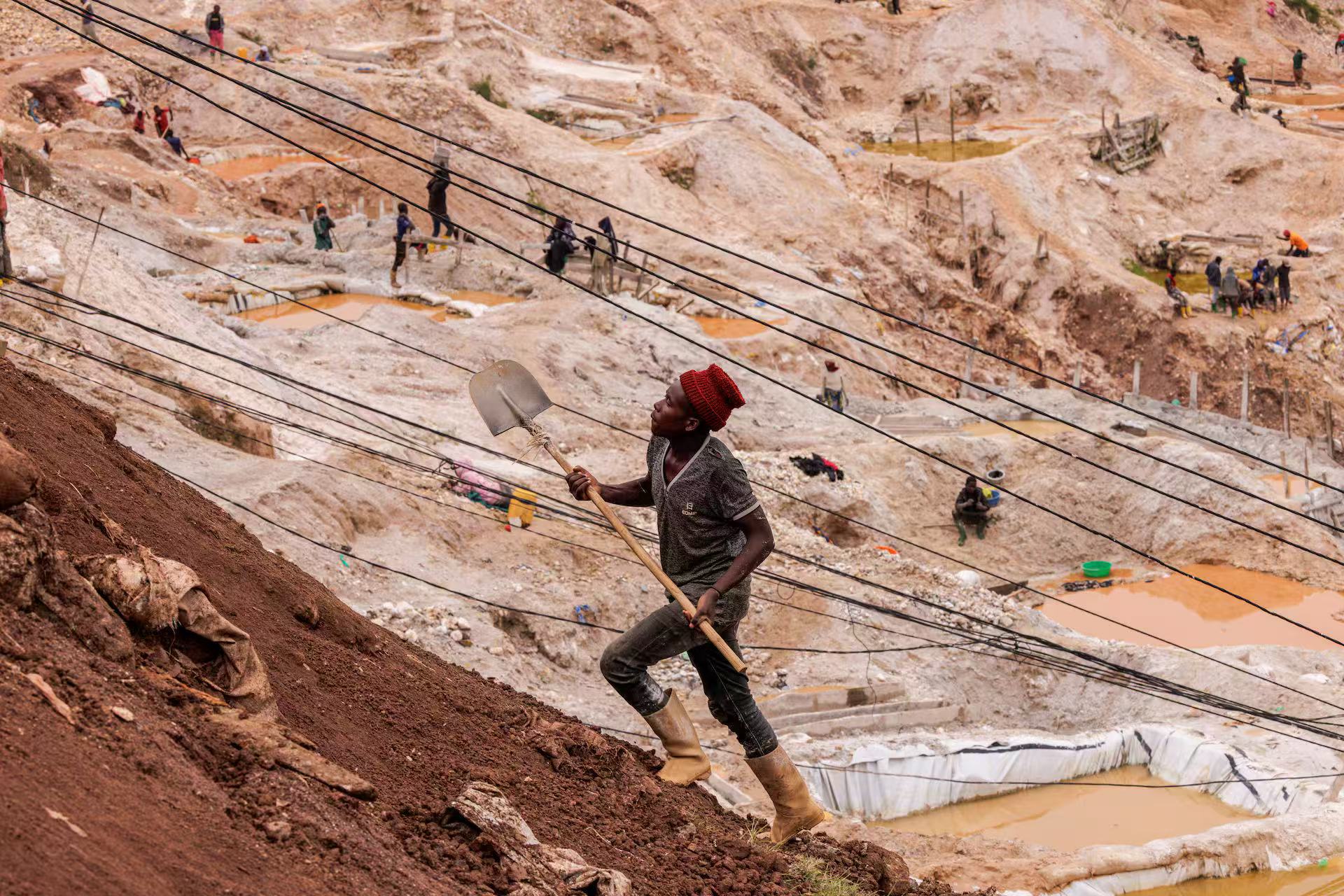
As global demand for cobalt, lithium, and copper increases exponentially, previously commercially unattractive illegal mining sites have become targets for criminal groups.In the DRC, the illegal trade of copper and cobalt involves local armed groups and members of certain government forces. In the initial design of the public-private partnership, private capital is responsible for financing and operation, while the government is responsible for providing security. However, collusion between officials and criminals has rendered government security unreliable. For example, members of the Armed Forces of the DRC have been documented securing illegal mining sites and escorting contraband to borders.
Beyond these localized criminal networks and governance failures, the greatest security threat to the Lobito Corridor is the rebel conflict in eastern DRC. In 2025, the M23 rebellion, an anti-government armed force that claims to have a 17,000-strong force, demonstrated strong mobilization capabilities. Over 80,000 people reportedly fled across borders due to the event. Although the main battle lines of the conflict are hundreds of kilometers away from the southern terminus of the Lobito Corridor, its spillover effects are systematically weakening the corridor’s foundation, depleting the DRC central government’s administrative resources and military budget. Security forces initially assigned to border control and resource protection have been diverted to reinforce the eastern front, leading to a noticeable dilution of law enforcement in the key southern mining provinces.
The DRC Ministry of Mines’ emergency suspension of nationwide artisanal copper and cobalt ore processing in December 2025 indirectly confirms the trend of uncontrolled expansion of informal mining in the south. Secondly, the conflict has weakened the central government’s control over local areas, exacerbating corruption and allowing local protectionist forces to rise. At present, the railway restoration work in the Congo section of the Lobito Corridor has not yet been fully initiated, resulting in higher costs if these safety issues persist.
Why U.S. Private Capital Struggles in Africa
The challenges currently facing the Lobito Corridor reflect a broader problem of the incompatibility of the prevailing private investment model to local conditions. This model overemphasizes capital mobilization, assuming that investing enough money in railway construction will automatically generate logistical efficiency and supply chain security. However, it neglects the local reality, presupposing the existence of relatively well-developed institutions.
In reality, in the absence of governance, the risks and costs of project operation increase, significantly diminishing their effectiveness. Statistics show that approximately 80% of infrastructure projects in Africa fail at the feasibility study stage since preparation fails to overcome financing obstacles from banks.
There have been attempts at unified corridor governance. In 2023, the three countries signed the Lobito Corridor Transit Transport Facilitation Agreement (LCTTFA).
However, the implementation history of this agreement also illustrates the host countries’ tendency to delay institutional reforms. Negotiations for the LCTTFA took a decade to sign, with a provisional secretariat only established in 2025. Even now, the body remains a coordinator rather than a regulator. It can recommend and assist, but lacks the authority to penalize member states for customs failures.
In this context, the Lobito Atlantic Railway (LAR) consortium, despite holding a concession, faces significant obstacles in overcoming institutional reform challenges. While it can repair physical assets, it is powerless against the institutional vacuum in the host countries.
Consequently, due to the lack of sovereign-level power, operations are often carried out through crisis management tailored to specific situations, without a unified system of regulations.
China’s Sovereign-Driven Alternative
Unlike the U.S., China has taken a different path from the beginning. The most distinctive feature of the Chinese model is the government-led initiative combined with the collaborative efforts of other capital.
First, in the infrastructure investment and operation under this model, the Chinese government, state-owned enterprises, and state-owned banks are the main participants. They have abundant funds and strong risk resistance capabilities, and can establish a firm foothold in the regions with relatively poor investment environments and institutional setups because they are in no rush to seek immediate returns.
Secondly, and more crucially, China’s “resource-for-infrastructure” model, or the “Angola model,” is a barter system between sovereign states. Under this framework, China provides targeted financing, construction teams, and technical support for infrastructure projects, while gaining long-term and stable access to strategic resources from the cooperating country through mutually agreed terms. Through this model, China avoids problems rooted in institutional deficiencies, such as corruption and low local construction efficiency, while ensuring construction quality and avoiding risks.
In 2004, the Benguela Railway’s restoration began under a 362 million U.S. dollar concessional loan from the Export-Import Bank of China, collateralized by Angolan oil revenues. The agreement terms stipulated that resources would ensure payment, not only reducing lender risks but also enabling quick disbursement of funds.
Similarly, the Addis Ababa-Jibouti Railway project cost 4.2 billion U.S. dollars. China Export-Import Bank provided 70% of the financing and repayment was linked to export revenues, including technical transfer clauses. China provided default guarantees through state-owned assets, alleviating low sovereign credit ratings.
Not only does China actively build a guarantee system through bilateral and multilateral agreements to address long-standing institutional problems in the region, but it also actively helps solve existing local institutional problems.
Take the Addis Ababa-Jibouti Railway. To address inconsistent customs standards and fragmented cross-border transportation, China, Ethiopia, and Djibouti signed agreements on customs coordination and transportation connectivity. The three parties unified customs declaration standards and inspection procedures. This reform reduced customs clearance times from three to seven days to 20 hours. Additionally, they also signed investment protection agreements with clearly defined risk-sharing rules. By 2025, the railway had handled over 20% of Ethiopia’s import and export freight volume.
Another project, the Lagos Port in Nigeria, has clearly stipulated property rights protection and policy stability terms through the China-Nigeria Capacity Cooperation and Investment Protection Agreement. It has introduced an automated customs clearance system and the “single window” mechanism, reducing the container clearance time to within 3 days. Coupled with the dispute resolution agreement that stipulates the priority arbitration procedure, the port’s container reached over 500,000 standard containers in 2025, becoming a benchmark for ports in West Africa.
These three advantages, namely resilience, assurance, and suppletion, are all based on continuous communication between the Chinese government and the local government. Essentially, they provide political endorsement and promote the improvement of related systems, which cannot be achieved by private capital-operated projects.
Lessons for African Infrastructure
When trains loaded with copper ore rumble through the Lobito Port, they carry not only minerals but also symbolize the intersection of America’s development ambitions and the reality of its institutions.
By analyzing the predicament of the Lobito Corridor as an institutional adaptation, one can observe a mismatch between the model and its environment. Although the U.S. model, characterized by private entities, can mobilize funds for hardware upgrades, it still struggles. This is because institutional guarantees are absent, which often determine the effectiveness of the project.
In contrast, the Chinese model demonstrates complementarity. It actively fills the gaps through embedded guarantees and agreements, reducing transaction burdens.
For the U.S., the effectiveness of the Lobito Corridor depends on its ability to enhance institutional supply. If it can incorporate governance assistance into the current system, such as establishing a legally capable joint committee or providing a guarantee similar to that in China, this project can have a stronger takeaway..
Regardless of the future outcome of the Lobito Corridor, they need to establish a pragmatic growth plan and adopt a pragmatic approach to develop a truly cooperative model that better aligns with local realities.