
This piece was written by a contributing Tsinghua student for The Future of U.S.–China Relations, a joint special issue by The Yale Politic and Tsinghua Youth Voice.
A year after “TikTok refugees” flooded into the Chinese social media app RedNote, the platform quietly saw a second, largely unnoticed wave.
In January 2025, TikTok refugees created a brief episode of excitement online, connecting American, Chinese, and global social media users during the short period in which TikTok was banned. Throughout the rest of 2025, life on both platforms quickly settled back into routine as the ban was reversed and RedNote’s algorithm stabilized.
Many American users, however, quietly began to return to RedNote.
This time, they caused no public uproar and drew little attention from either the press or RedNote’s feed. By January 2026, when many Chinese users on RedNote recalled the influx from a year earlier and wondered where those TikTok refugees had gone, they were largely unaware that a second “TikTok refugee wave” had already arrived. Their return suggests something deeper than a fleeting moment of cross-platform or cross-cultural novelty. It reflects how major political decisions enter ordinary lives and how social media users actively respond through their online choices.
***
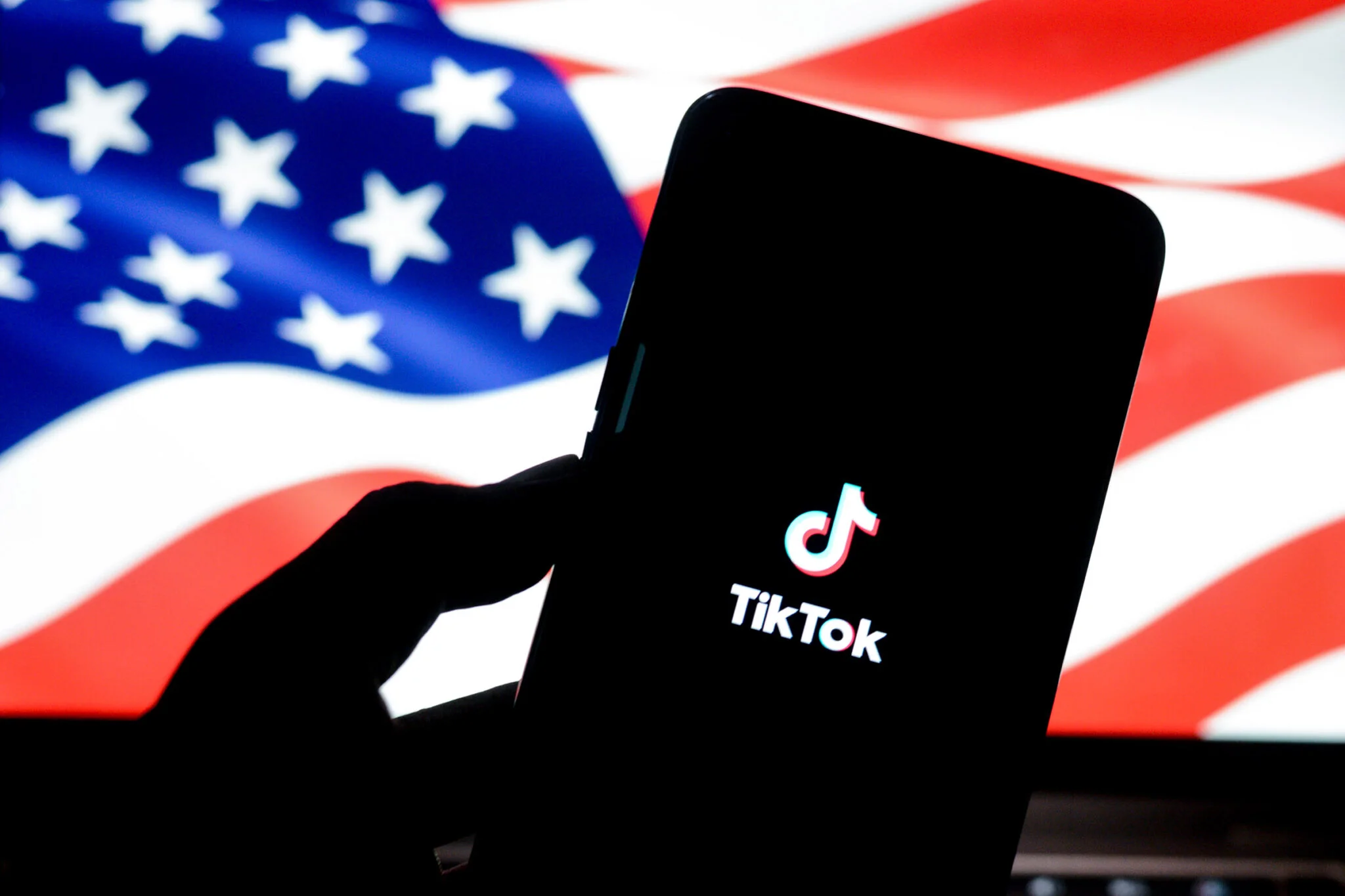
In January 2025, days before the “Protecting Americans from Foreign Adversary Controlled Applications Act” was set to take effect, more than half a million American users migrated to another Chinese app, RedNote, as “TikTok refugees”. The Act was passed on 24th April, 2024 and required the prohibition of “foreign adversary controlled applications”, specifically TikTok under ByteDance, starting 270 days after the enactment of this Act, which is 19th January 2025. Although U.S. President Donald Trump ordered a 75-day grace period during which no action would be taken against TikTok, the app remained inaccessible for one day due to the timing, before Trump’s inauguration on January 20. As a result, in the days leading up to January 19, RedNote experienced a sharp influx of American users, disrupting its feed and instantly bringing RedNote into the spotlight.
Neither the refugees nor RedNote’s existing users appeared prepared for the sudden encounter. TikTok refugees posted greeting videos with the help of translation tools, and Chinese netizens responded enthusiastically. Chinese influencers and video bloggers quickly began producing welcome content in English, emphasizing friendliness and respect for community norms. Many also posted tutorials on basic Chinese phrases and internet slang. The enthusiasm spilled beyond the two countries, which even encouraged users from elsewhere to download the app and explore it themselves.
The episode spread rapidly across Chinese social media. Even state outlets such as People’s Daily published commentary on the phenomenon. For several days, RedNote’s feed became a blur of welcome videos, question-and-answer exchanges, and reposted clips that users found humorous or unexpectedly moving. One particularly resonant episode became known as “the replies to Li Hua’s letters.” Li Hua is a fictional student, a familiar figure in China’s Gaokao college entrance exam writing prompts, where students are routinely asked to compose letters to foreign friends under that name. When an American TikTok refugee encountered this trope and posted a video reply addressed to “Li Hua,” it struck a chord with Chinese viewers. Another humorous moment came with the trend of “paying cat tax”, started by a TikTok refugee known as “The Mother of Lili.” She shared photos of her cat, Lili, and joked that TikTok refugees “should pay cat tax to be considered for acceptance” on RedNote. The trend quickly prompted a flood of cat and dog photos, bringing users closer together through their shared love of animals.
As refugees swarmed into RedNote, everyday life in both China and the United States was suddenly made visible to people who had rarely encountered it directly. Through sharing their daily lives, users on both sides noted how much they had in common. One of the most popular topics at the peak of the influx was “checking accounts,” a trend in which users compared the prices of daily goods across countries. Many American users expressed astonishment at how inexpensive items such as eggs were in China. For many Chinese users, the United States had long existed through a certain lens: a developed, prosperous country that seemed distant from everyday life in China. As they watched American users complain about the frustrations of daily life in the U.S., Chinese users forged connections with them through friendly humor.
Moreover, the influx was a refreshment from China’s long-standing digital separation from Western platforms. For over a decade, most Chinese users have been unable to access Facebook, X, Instagram, or Google due to the Great Firewall, China’s own internet protection system that blocks most Western websites within the country. Although those who wish to access these platforms can use VPNs, which are widely available and tacitly tolerated by the government, the number of users who are able to use them and regularly engage with Western social media remains limited. They are largely concentrated among users with overseas or international backgrounds. As for the vast majority of Chinese netizens, their social media use has barely any overlap with platforms used by foreign users, especially since the rise of WeChat and, later, video and self-media platforms including Bilibili, RedNote, and TikTok itself. In fact, in the case of TikTok, Chinese users use the domestic version, Douyin, while the TikTok familiar to American and other international users is, in practice, inaccessible to Chinese users inside the country. The TikTok refugee influx therefore brought a global dimension to an otherwise largely domestic Chinese social media space.
Inevitably, amid the curiosity and enthusiasm, dissenting voices also emerged. “Chinese netizens are being overly nice,” read one anonymous comment. “This is chong yang mei wai.” In Chinese, the term refers to an uncritical admiration of foreign cultures or people, a tendency often criticized in Chinese discourse. While such attitudes have waned in recent years, they remain a sensitive subject. RachelR, an American influencer who grew up in China, joked in one of her videos that she had been on RedNote long enough to be considered a laonei (Chinese) rather than a laowai (foreigner), and that she felt slightly envious of the attention TikTok refugees received. Others questioned the label “refugee” itself. “They call themselves refugees, but they’re acting more like colonizers,” one Chinese user wrote. Still, many refugees felt the term captured their experience. “We really hoped Chinese people on RedNote would like us and welcome us,” one TikTok refugee, who prefers to be anonymous, told The Politic. “Calling ourselves refugees helped ease the atmosphere.”
***
For content creators on RedNote, the influx was immediately recognized as a rare opportunity to capture attention.
“I remember hearing about the TikTok ban when I had just moved from New York to London,” Martin Su, a freelance influencer on RedNote, told The Politic. Still adjusting to the time difference, Su nevertheless sensed that the arrival of foreign users presented a unique moment. His account already focused on cross-linguistic and cross-cultural communication. Of mixed Chinese and Korean heritage, he regularly uses Mandarin, Shanghainese, Korean, English, and Japanese in his content.
“I couldn’t make a polished video in time,” Su recalled, “but I knew I could start a livestream.” That day, during his livestream, he found himself chatting with American users from a wide range of backgrounds, many of whom spoke no Chinese at all, an experience that left a lasting impression. “At one point, there were nearly 10,000 people in the stream.” Su quickly produced several related videos. Within a week, his follower count rose from around 100,000 to roughly 140,000. More importantly, he said, the episode reshaped his career path. “That was when I realized I really enjoyed content creation and that this is what I want to do professionally.” Su graduated from NYU in 2025 with a bachelor’s degree in journalism and communication, briefly worked at a company before resigning to run his social media account full time.
Comedy influencer Roxycat was another prominent Chinese creator during the TikTok refugee influx. She mainly creates English-language videos exploring cross-cultural differences between China and the West. She was among the first creators to post welcome videos at the very start of the influx. Interactions between American and Chinese users were still tentative then, but Roxycat used humor to introduce RedNote and Chinese internet culture, and her early videos each earned over 100,000 likes. Riding the wave of attention, she produced a large volume of follow-up content over the course of a month, as well as videos introducing the Chinese film Ne Zha 2. Most of these videos continued to receive more than 100,000 views. Roxycat remained one of the few creators consistently engaging with foreign users and producing content focused on cultural exchange, even after TikTok resumed its availability. Her fanbase on RedNote grew from several hundred thousand at the time to around one million today. In a recent video reflecting on the year 2025, she credited the wave of TikTok refugees with having a major impact on her content creation work and motivating her to engage more actively in cross-cultural exchange.
They were far from alone. The refugee episode was unmistakably a RedNote hotspot. Student blogger Marychain, who wrote a widely circulated commentary shortly after the influx, observed that the platform itself seemed different during those days. “The overall quality of content was significantly higher than before or after,” she told The Politic. Many creators posted videos using the TikTok refugee tag, and engagement surged. Smaller creators with tens of thousands of followers also saw engagement levels far above their usual reach during the influx.
Some users worried that the surge would overwhelm local content, but this turned out to be an unnecessary concern. “At first, your entire feed was disrupted,” Su said in an interview with The Politic. “But eventually, the creators you followed before started showing up again.”
Throughout 2025 and into 2026, RedNote continued to expand its features, introducing click-to-translate tools and voice comments. For most users, those who did not actively seek out foreign creators gradually stopped seeing refugee-related content. Increasingly, Chinese and foreign users appeared to receive different algorithmic feeds altogether.
By January 2026, on the first anniversary of the refugee episode, some Chinese users began asking where the foreign newcomers had gone. Many had returned to TikTok once it resumed normal operations, posting only occasionally on RedNote before quietly abandoning their accounts. Under posts discussing TikTok refugees, several American users admitted that while they kept the RedNote app, they used it only sporadically, with TikTok remaining their primary platform for short videos. TikTok influencers and celebrities tended to linger on RedNote a bit longer. For public figures such as American actors or singers, RedNote has become a space to engage with Chinese fans, similar to Instagram.
***
Just when it seemed like the story of TikTok and RedNote had reached an end, a second wave of TikTok refugees began to arrive.
In January 2026, TikTok’s U.S. operations were spun off into a majority-American joint venture, with firms such as Oracle, Silver Lake, and MGX taking controlling stakes, while ByteDance retained only a minority share. Refugee-tagged posts on RedNote began to grow again, though this time with little visibility. The atmosphere differed markedly from 2025. Unlike the first influx, the second migration generated almost no public attention on the Chinese internet. Yet, this shift reflected a deeper issue, one that went beyond online cultural exchange and spoke to the influence of political events.
Users who arrived in 2026 voiced different reasons for stopping their use of TikTok. “Is it just me, or has TikTok become harder to use?” one user asked. Others echoed the sentiment, complaining that scrolling felt slower and recommendations less intuitive. Some also expressed heightened concern over data privacy. “Those companies are monitoring our personal data on TikTok,” one American user wrote on RedNote recently. “They even track religious information.” The irony was difficult to miss. U.S. officials had warned about Chinese surveillance and attempted to prohibit any apps affiliated with China, while users expressed greater unease about American corporate oversight than Chinese parent companies like ByteDance.
Censorship on TikTok wasn’t news. TikTok refugee and now a regular RedNote user Brian told The Politic about how platform censoring on TikTok is serious enough to make him stay in RedNote: “When the war on Gaza began, and your feed shifted to news about what was happening and creators began pivoting towards the events, and rightly so. But, the censoring and the ‘shadow bans’ began: controlling posts’ views, comments reported the instant your finger left the ‘enter’ key, and your feed flooded with propaganda. On weekends or periods during the day, posts on Palestine were nowhere. It’s worsened as the genocide has continued.” Brian had originally started using TikTok to watch videos about funny animals and stupid human tricks, but now the state of TikTok has made it a less ideal place for entertainment. “I stayed with RedNote because it had everything TikTok had before with a more global view, and also the freedom of expression here that I used to enjoy on TikTok.” The fact is, RedNote does censor, but it focuses more on themes that are sensitive in China. Still, this happens to grant the app more freedom and openness for non-Chinese users. In this sense, the situation feels almost accidental, much like the timing of TikTok’s restrictions in January 2025, which itself carried a certain dramatic irony.
The broader TikTok–RedNote episode invites reflection on deeper issues. On the one hand, it shows how great-power political decisions can influence everyday life in different countries, even including the realm of online entertainment. Every country operates within its own political constraints, and no one is entirely exempt from them. On the other hand, what global netizens did during the refugee episode shows that individuals can navigate beyond state-level political pressures and make their own choices about where to spend their time and express themselves online. Such autonomy is difficult for any national policy to override. In the end, the episode showed that people—whether Chinese, American, or from elsewhere—share common interests and perspectives. They just need the right opportunity and an open, inclusive space to connect.